
Your Brain on Storytelling
When you watch a movie or a TV show, your brain is largely a passenger. The screen provides all the visual information: the setting, the characters’ expressions, the action. It’s a rich experience, but
a passive one. Audio storytelling works differently. Without visual cues, your brain is forced to become a co-creator in the experience. Radio scholars call this “the theater of the mind.” When a host describes a scene, your imagination has to build it. This act of mental construction is deeply personal; the world you imagine is built from your own memories and experiences. The cognitive processing required for an audio-only story is richer, fostering a stronger connection because you are actively participating in its creation. This makes the narrative feel like it belongs to you in a way that pre-packaged visuals rarely can.
The Undeniable Power of the Human Voice
Long before screens, the human voice was our primary tool for connection and storytelling. Our brains are hardwired to decode a huge amount of information from vocal cues alone. Tone, pitch, pace, and even the smallest sigh can convey emotion, build trust, and create a sense of presence. Unlike visual information, sound travels directly to the limbic system, the part of the brain responsible for emotion, memory, and bonding. Research shows that a comforting human voice can even increase levels of oxytocin, the hormone associated with safety and affection. This biological response means that when a podcast host speaks in a warm, confident, or vulnerable tone, your nervous system can react as if they are physically close, creating a profound sense of intimacy that bypasses the critical distance we often maintain with on-screen characters.
The One-Sided Friendship You Don't Mind
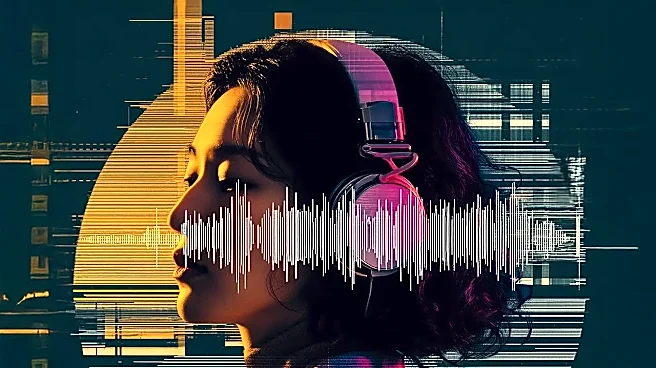
This deep connection with a media figure you've never met has a name: a parasocial relationship. The term was first coined in the 1950s to describe the illusion of intimacy audiences felt with TV and radio personalities. Podcasts, however, have supercharged this phenomenon. The format is inherently conversational and often feels like eavesdropping on a private chat. Because most people listen with headphones, it creates a sensation that the host is speaking directly inside your head, a phenomenon called “in-head localization.” One study found this effect can make a speaker twice as persuasive and triggers a greater feeling of closeness. When hosts share personal stories, imperfections, or confessions, it enhances their perceived authenticity, making listeners feel like they truly know them as a friend.
An Escape from Visual Overload
In a world saturated with the visual noise of social media feeds, streaming services, and endless notifications, audio offers a refuge. Screen-based entertainment demands your full visual attention, often triggering comparison or performance pressure. Audio asks for less but can offer more. It allows you to multitask, integrating into the quiet moments of your day—the commute, the gym, the kitchen—without demanding you stop everything to stare at a screen. This unique ability to be present without being all-consuming makes podcasts a uniquely low-friction companion. It’s an intimacy that doesn’t require eye contact or the exhausting performance of modern digital life, allowing for a more genuine and less demanding form of connection.