



The Remake Blueprint: Guaranteed Money?
At its core, Disney's live-action remake strategy is about minimizing risk by banking on proven success. Why gamble on an entirely new story when you have a library of beloved classics with built-in fanbases? This model has yielded massive returns. Films
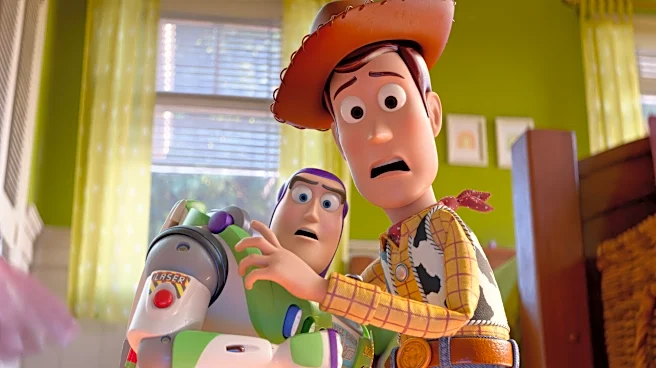
like 'The Lion King' (2019) and 'Aladdin' (2019) each soared past the $1 billion mark globally. The strategy relies on a simple premise: audiences who loved the originals as children will pay to relive that nostalgia and share it with a new generation. This creates a reliable revenue stream that not only fuels the box office but also reinvigorates merchandise, theme park attractions, and content for its streaming service. These are not just movies; they are multi-billion-dollar brand renewals. The studio saves on marketing, as the stories are already well-known, and can leverage the original's success to create a global event. Even films with mixed critical reception often become financial hits, proving the model's resilience.
Calculating the Risk of Creative Fatigue
While financially rewarding, the remake model is not without significant risks. The most obvious is audience fatigue. With so many remakes in the pipeline, there's a growing sense of creative bankruptcy, with critics and some fans arguing that the focus on recycling old content stifles originality. A poorly received remake can also do more than just flop at the box office; it can tarnish the legacy of the original. Misfires like 'Dumbo' (2019) or the straight-to-streaming 'Pinocchio' (2022) serve as cautionary tales, proving that nostalgia alone isn't always enough. Furthermore, the visual translation from animation to live-action can be jarring. The expressive, physics-defying charm of animation is often lost in photorealistic CGI, which can feel soulless by comparison. Each new remake, therefore, becomes a gamble on whether the audience's appetite for nostalgia outweighs their desire for novelty.
Why Moana, and Why Now?
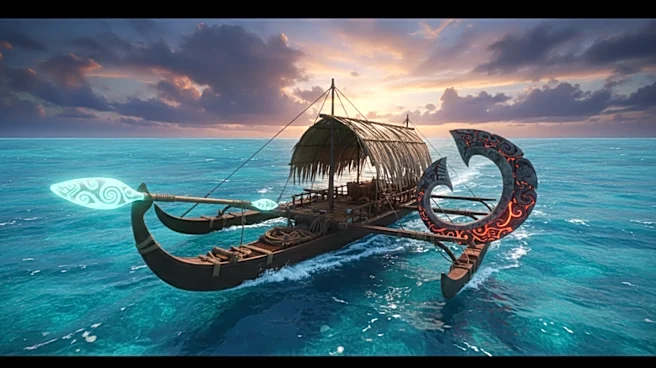
The decision to remake 'Moana' is a fascinating evolution of this model. Remaking a film from 2016, which is still incredibly popular and culturally relevant, is a bold new step. A key factor is the star power of Dwayne Johnson, who not only reprises his role as Maui but also serves as a producer. Johnson is one of the most bankable stars in the world, and his deep personal connection to the story—he has said the character of Maui was inspired by his own grandfather—adds a layer of authenticity. The remake, scheduled for a July 10, 2026 release, also secures a key piece of intellectual property for another generation. By casting a new actress, Catherine Laga'aia, as Moana, with original voice actress Auli'i Cravalho stepping into an executive producer role, Disney is passing the torch while keeping the original talent involved, a move designed to win over fans.
A New Kind of Gamble
The 'Moana' project is a unique and high-stakes test of Disney's strategy. It's happening in the shadow of 'Moana 2', an animated sequel that was released in late 2024. Releasing two major films from the same franchise so close together risks oversaturating the market. Originally, the live-action film was slated for 2025 but was pushed back to 2026 to create breathing room between the two projects, a clear sign that the studio is aware of the potential for 'Moana fatigue'. This makes the live-action film the ultimate test of the remake model: can Disney sell audiences the exact same story twice within a few years, once as an animated sequel and again as a live-action retelling? The success—or failure—of this experiment will signal just how far the company can push its strategy of leveraging existing IP before audiences finally say they've had enough.