




Some garments just hang. Others perform an architectural feat. The double-breasted jacket belongs to the second group, a timeless piece of tailoring engineered not just to cover the body, but to reshape it, shifting its visual center of gravity.
More Than Just Extra Buttons
At its
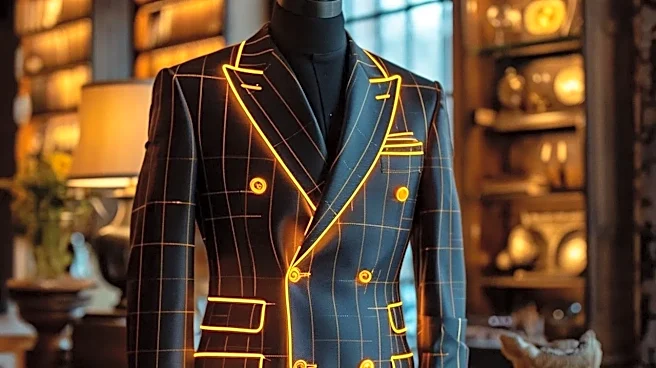
core, a double-breasted jacket is defined by its overlapping front panels. Unlike a single-breasted jacket where the two sides meet with a minimal overlap, a double-breasted cut features a wide swath of fabric that wraps across the torso to fasten on the opposite side. This isn't just a stylistic quirk; it's a structural decision that fundamentally changes how the garment interacts with your frame. With two layers of fabric across the chest, the jacket naturally has more substance and presence. This engineering—two parallel columns of buttons securing a deep overlap—is what gives the style its distinctive, almost cinematic quality, sharpening the silhouette before any other tailoring trick comes into play.
Creating the 'V' Shape
The phrase 'center of gravity' perfectly captures the visual mechanics at play. A well-cut double-breasted jacket creates a powerful V-shaped silhouette that broadens the shoulders and chest while suppressing the waist. This effect is achieved through a few key elements working in concert. First, the wide, overlapping front creates a strong horizontal line. To counteract this, the jacket almost always features sweeping peak lapels that draw the eye upward and outward, enhancing the perception of width at the shoulders. Second, the button configuration—known as the 'button stance'—plays a crucial role. A classic '6x2' arrangement (six buttons, two functional) creates a defined focal point. By keeping this fastening point at the natural waist, the jacket cinches in, creating a taper that makes the chest appear broader and the waist slimmer. The result is a silhouette that projects authority and structure.
A History of Power and Presence
The double-breasted jacket's commanding presence isn't an accident; it's in its DNA. The design traces its lineage back to the naval 'reefer' jackets of the 19th century, which were built with an overlapping front for practical protection against wind and sea spray. By the 1930s, the style had been adopted by aristocrats and Hollywood icons, becoming a symbol of formal elegance and confident masculinity. From Humphrey Bogart on the silver screen to the power brokers of the 1980s, the double-breasted suit has always been the uniform for those looking to make a statement. Its structure implies formality, and its silhouette commands attention in a way its single-breasted cousin does not.
The Modern, Softer Shoulder
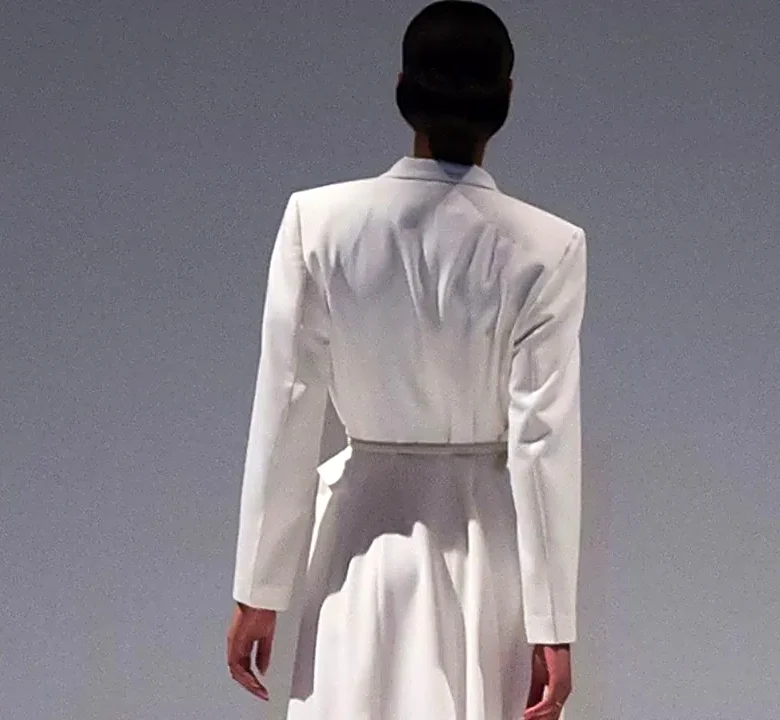
While its history is rooted in formality, the modern double-breasted jacket is far more versatile than its ancestors. Contemporary designers have softened the once-rigid construction, moving away from the aggressive shoulder pads and boxy cuts of the past. Today's versions often feature a closer fit, a higher armhole, and a more natural shoulder, making them feel less like armor and more like a sophisticated staple. This evolution has also unlocked its potential as a standalone piece. A modern double-breasted blazer can be worn more casually, paired with everything from fine-knit turtlenecks to dark chinos or even tailored denim. The key rule, however, remains: it's designed to be worn buttoned when standing to maintain its carefully engineered shape. Leaving it open causes the front panels to splay, undermining the very silhouette it was built to create.