


The Headliner's Haul vs. The Opener's Hand-Carried Rig
The gear gap between the top and bottom of the festival poster is immense. A headliner travels with a level of production that includes their own sound engineers, truckloads of equipment, and precisely replicated setups to ensure consistency every night.
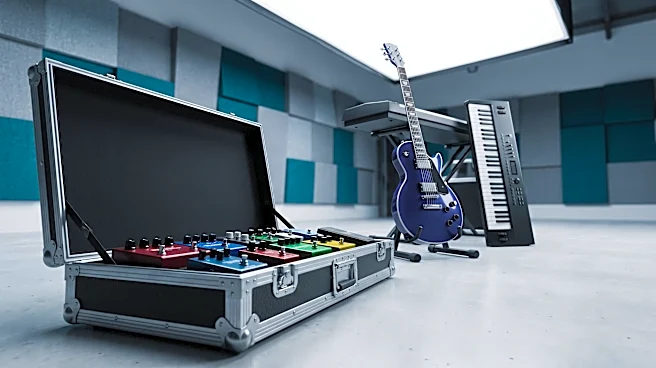
They might have a wall of amps that are as much a stage prop as a functional tool. Meanwhile, an artist playing an early afternoon slot faces a different reality. They often rely on what’s called a “backline”—a shared set of house gear like drum kits and amplifiers provided by the festival. This system is crucial for quick set changes, as there's no time to swap out an entire stage worth of equipment between bands. For these acts, the decision becomes what essentials to bring: that one specific guitar, a pedalboard with their signature sounds, or custom cymbals that define their style, while plugging into the communal gear for the rest.
Vintage Soul or Digital Reliability?
Every musician dreams of playing their prized 1960s guitar or vintage tube amp on a massive stage. That 'magic' gear has a warmth and character that's hard to replicate. However, a festival stage, especially in the Texas heat, is a hostile environment for delicate equipment. High temperatures and humidity can cause wooden instruments to warp, glue to soften, and vintage electronics to fail. This has fueled the rise of digital and modeling gear. Companies like Kemper and Fractal Audio create units that digitally capture the sound of countless amps and effects, offering stunning consistency and reliability in a lightweight, rack-mounted package. The choice becomes a trade-off: do you risk your irreplaceable vintage treasure for its tone, or do you opt for a digital rig that will sound the same in Austin's 90-degree heat as it does in a cool studio, even if some purists argue it lacks 'soul'?
Surviving the Elements and the Stage
Beyond the instruments themselves, artists have to pack for survival. The Austin climate is notoriously unpredictable, and what works on a climate-controlled indoor stage may not survive a weekend at Zilker Park. Dust kicked up by thousands of fans can wreak havoc on electronics and faders. Sudden rain can damage gear that isn't properly protected. Artists must consider if their road cases are truly waterproof and if their pedalboards are sealed from dust. Furthermore, the sheer size of the stage and sound system changes everything. An amp that sounds huge in a club might sound thin and small in an open field, forcing bands to rely more on the front-of-house sound system and their in-ear monitors. This means bringing reliable monitoring systems, robust power conditioners to handle fluctuating festival power, and plenty of spare cables, batteries, and strings are non-negotiable.
The Non-Negotiable and the Personal
Ultimately, the gear that makes the cut comes down to two categories: the non-negotiables and the personal totems. The non-negotiables are the pieces of equipment central to a musician's sound—a vocalist's preferred microphone, a guitarist's specific overdrive pedal, or a drummer's snare. Even when using a backline, artists will almost always bring these core components. Then there are the personal items. It might be a road-worn guitar that isn't their most expensive but feels like an extension of their body, or a particular keyboard stand set to the perfect height. Many musicians simply can't perform with the same confidence on unfamiliar equipment. So while they may leave their most valuable gear at home to protect it from the rigors of the road, they bring the pieces that allow them to feel comfortable and deliver the best possible performance for the thousands of fans watching.