






The Threat Is a Promise, Not a Monster
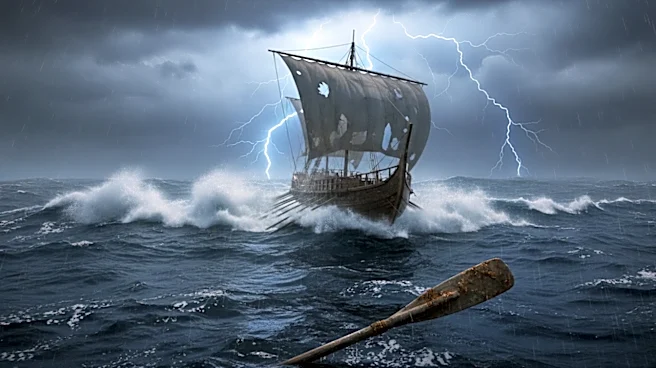
First, forget any notion of monstrous bird-women on a rock. Nolan’s approach to mythology, as hinted at with his upcoming film "The Odyssey," is to ground it in a tactile, psychological reality. His Sirens wouldn't be creatures to be fought, but an idea
to be survived. The horror wouldn't come from a visual effect, but from the terrifying allure of the Sirens' promise. In Homer’s original text, the Sirens don’t offer pleasure; they offer knowledge. They promise to tell a man everything about his life, his past, and his future. For a Nolan protagonist—often obsessive, guilt-ridden men haunted by their pasts—this is the ultimate temptation. The spectacle isn't external; it's the internal, agonizing desire of the characters to hear the song, even knowing it leads to ruin. The true danger is the perfect, deadly fulfillment of their deepest-held obsessions.
Weaponizing Sound and Silence
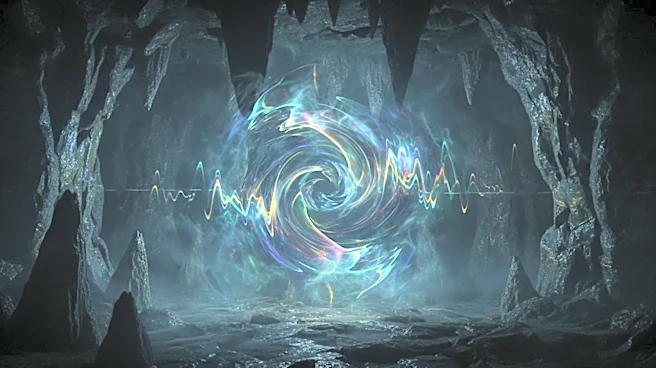
Nolan's films are famously, sometimes controversially, loud. He uses sound as a physical, visceral tool. For the Sirens, he wouldn't compose a simple, beautiful melody. He would weaponize sound design. The key would be his well-documented use of the Shepard tone—an auditory illusion of a constantly rising scale that never reaches its peak, creating unbearable, unresolved tension. He used it in Dunkirk to structure the entire film and evoke a sense of ever-increasing intensity. Imagine that sonic principle applied not to a battle, but to a song. The Sirens' call would be a psychoacoustic assault. It would be an endlessly ascending promise, a sonic corkscrew that bores into the listener's mind, creating a feeling of infinite, tantalizing ascent that pulls them toward the rocks. The mix would overwhelm, blurring the line between non-diegetic score and the diegetic song, making the audience feel as disoriented and ensnared as the sailors.
A Subjective, Time-Bending Trap
Time is Nolan’s most consistent thematic obsession. From Memento to Inception and Interstellar, he treats time as a malleable, subjective dimension. A Nolan-directed Siren sequence would almost certainly fracture chronology. A sailor might hear the song for what feels like a single minute in objective time, but within that minute, they experience a subjective eternity—a lifetime of their greatest desire fulfilled. One man hears the voice of a lost child, another relives his moment of greatest glory, and another finds the answer to a question that has tormented him for decades. Nolan could use his signature cross-cutting to show us these personalized, dream-like realities unfolding simultaneously while, in the prime timeline, the ship is simply drifting toward its doom. This aligns with the Sirens’ mythic function: they offer a perfect, all-knowing fantasy that leads to a very real, very final death.
An Internal, Psychological Spectacle
Ultimately, Nolan’s greatest trick is making the internal struggles of his characters feel as epic as any exploding building. His films that flirt with horror, like the Scarecrow sequences in Batman Begins or the psychological dread of Insomnia, do so by externalizing a character’s inner state. The Sirens are a perfect vehicle for this. We would not see the Sirens, just as we barely see the enemy in Dunkirk. Instead, we would see their effect. The spectacle would be watching Odysseus, a man defined by his cunning and self-control, reduced to a primal state of desperate longing, his face a mask of agony and ecstasy as he fights against his ropes. The horror is in the pre-commitment—the act of binding oneself because you know your will is not strong enough. By focusing on the subjective experience of being lured, Nolan would create a sequence more terrifying than any monster reveal, proving that the most spectacular threats are the ones that live inside our own minds.