







Meet Astrophage: The Star-Eating Organism
In the world of the novel, Astrophage is a single-celled alien microbe that threatens to plunge Earth into an ice age by consuming the Sun's energy. These organisms are described as interstellar algae or mold, traveling from star to star. Their life cycle
is simple but terrifyingly effective: they absorb immense energy from a star, travel to a nearby planet with a carbon dioxide-rich atmosphere (like Venus in our system), use that CO2 to reproduce, and then the parent and child cells return to the star to feed again. This process allows them to multiply and spread, forming a swarm that visibly dims the star they inhabit. They are depicted as carbon-based and water-filled, much like life on Earth, but with abilities that put them in a class of their own.
Grounded in Reality: Space-Faring Microbes
The idea of a lifeform surviving in space isn't pure fantasy. Here on Earth, we have extremophiles—organisms that thrive in conditions lethal to most life. Some bacteria, like Deinococcus radiodurans, have been shown to survive for years exposed to the vacuum and intense radiation of outer space. These real-life microbes often survive by forming protective layers, where the outer cells die to shield the ones inside. Furthermore, the concept of life harnessing stellar energy is the basis for photosynthesis on Earth, though plants are incredibly inefficient, capturing only 1-2% of available light energy. There are even fungi being studied on the International Space Station that may be capable of 'radiosynthesis'—converting gamma radiation into energy. Weir grounds Astrophage in these real biological principles, making the initial concept feel plausible.
The Ultimate Battery: Energy Into Mass
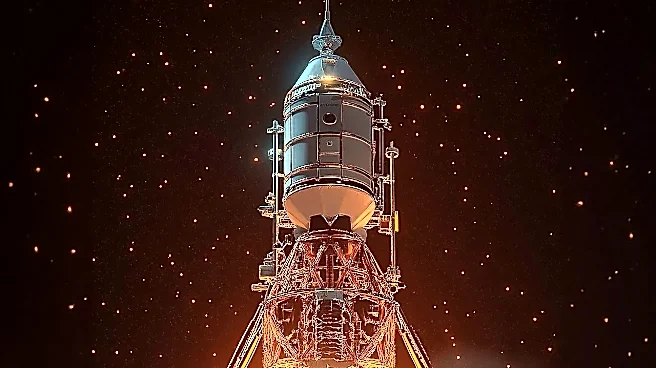
This is where Astrophage's abilities jump from plausible to profoundly powerful. The organism's key trick is its ability to convert energy directly into mass for storage, and then convert that mass back into energy with virtually no loss. In the book, an Astrophage cell maintains a constant internal temperature of 96.415 degrees Celsius. Any excess heat, even on the surface of a star, is absorbed and converted into mass. When it needs energy to move or stay warm, it reverses the process, releasing the energy as a specific wavelength of infrared light. This makes Astrophage a near-perfect battery, storing the kinetic energy of a bullet in a single microscopic cell. This incredible energy density is what makes it a viable—and wildly potent—rocket fuel for the Hail Mary spacecraft.
The Biggest Leap: Bending Quantum Physics
While extremophiles are real, Astrophage's core abilities represent the fiction's biggest leap. The primary invention is a property called "super cross-sectionality," which Weir himself admits is where he had to introduce some fictional science. This property makes the microbe's cell membrane completely opaque to all forms of radiation, including neutrinos—subatomic particles that can normally pass through an entire planet without stopping. This is described as physically impossible with our current understanding of quantum mechanics. This fictional trait is what allows Astrophage to trap energy and convert it to mass with near-perfect efficiency, a process that would otherwise violate the laws of thermodynamics. Its ability to re-emit this energy as a focused beam of light for propulsion at near-lightspeed is another massive stretch, creating a photon drive that is elegant in theory but far beyond any known biological or technological capability.