




The Philosophy of Flow
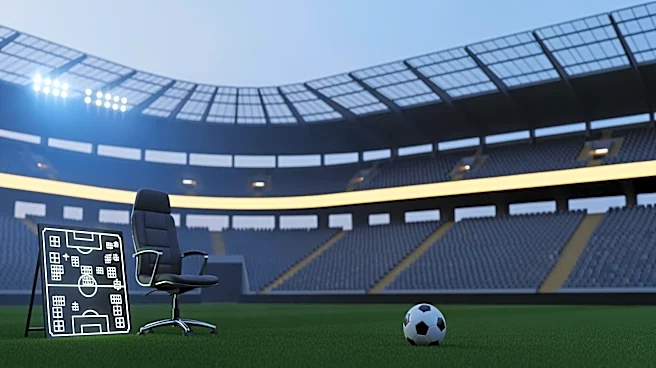
First, the basics. A professional soccer match consists of two 45-minute halves. The clock starts at 0:00 and runs continuously until it hits 45:00. Unlike in the NFL or NBA, where the clock stops for every incomplete pass, timeout, or foul shot, the soccer clock marches on through most minor interruptions. The fundamental idea is to preserve the rhythm and momentum of the game. Soccer is a sport built on sustained pressure, fluid movement, and gradual build-ups. Constant clock stoppages would fragment the experience, turning a flowing contest into a disjointed series of set-pieces. By keeping the clock running, the game maintains a sense of urgency and cohesion that is central to its identity.
Enter 'Stoppage Time'
So if the clock doesn't stop, what happens when
a player is down for three minutes with an injury? This is where “stoppage time,” also known as “added time” or “injury time,” comes in. It’s not a bonus period; it’s an attempt to reclaim time that was lost during the half. At the end of each 45-minute period, the referee adds on a discretionary amount of time to compensate for significant delays. This is why you’ll see the fourth official on the sideline hold up a board with a number on it—say, “+4”—indicating that a minimum of four extra minutes will be played. The game doesn't end precisely at 45:00 or 90:00. It ends when the referee decides the allotted time, including stoppage time, has been completed.
What Counts as Lost Time?
The referee is the sole arbiter of time, but FIFA’s Laws of the Game give clear guidelines on what justifies adding time back. The most common reasons include: - **Substitutions:** Each team is allowed a set number of substitutions, and the process of one player leaving and another entering the field takes time. - **Injuries:** Assessing and treating an injured player is the most obvious source of lost time. - **Goal Celebrations:** While a key part of the spectacle, elaborate celebrations eat into the 90 minutes. - **Disciplinary Actions:** Issuing yellow or red cards involves stopping play to speak with the player and record the infraction. - **Time-Wasting:** This is a crucial one. If the referee believes a team is deliberately delaying—by taking too long on a goal kick, throw-in, or free kick—they will make a mental note to add that time back at the end. - **VAR Reviews:** In the modern game, video assistant referee (VAR) checks can cause significant delays and are a major contributor to longer stoppage times.
The Art of the Estimate
Here's the part that can feel infuriatingly imprecise: stoppage time is an estimate. The referee doesn't use a separate stopwatch for every single delay. Instead, they keep a running mental tally of the major stoppages. This human element is why the added time can sometimes feel arbitrary. Did that injury really take two minutes? Was that celebration only 30 seconds? This subjectivity is part of the sport’s fabric. In recent tournaments, like the 2022 World Cup in Qatar, FIFA instructed referees to be much more literal in their calculations, leading to unusually long periods of stoppage time—often eight, ten, or even twelve minutes. This was a deliberate effort to combat time-wasting and ensure fans get to see a full 90 minutes of action.
Why Not Just Stop the Clock?
Ultimately, the running clock creates a unique form of drama. In American sports, you know exactly how much time is left for a game-winning drive. In soccer, the tension comes from not knowing. When there are two minutes left in a 1-0 game and the board shows “+5” minutes of stoppage time, the feeling is electric. The defending team is desperately clearing the ball anywhere, while the attacking team scrambles for one last chance. That uncertainty, that feeling that the whistle could blow at any second, is a suspense that a precise, sterile game clock could never replicate. It’s a trade-off: soccer sacrifices the exactitude of American sports for a more organic and emotionally potent finale.