





The King of Pop’s Singular Statement
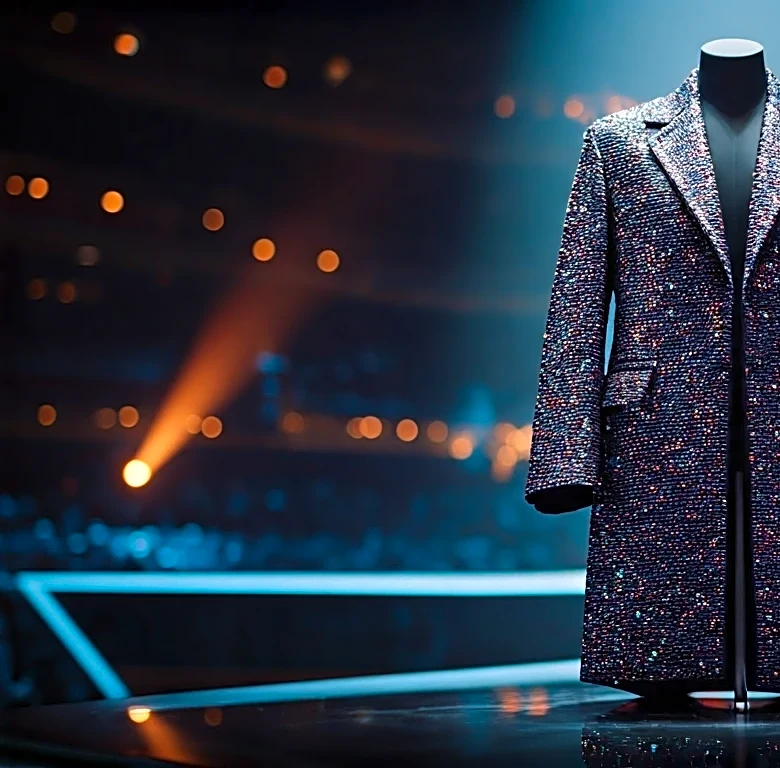
You can’t talk about performance gloves without starting with Michael Jackson. While his first televised moonwalk happened at the *Motown 25* special, it was at the 1984 American Music Awards that the glove became synonymous with his global domination. That night, Jackson, riding the unstoppable wave of *Thriller*, showed up in a sequined military jacket and a single, crystal-encrusted white glove. He didn't even perform, but he didn't need to. As he collected a record-breaking eight awards, the glove did the work. It was a brilliant piece of visual branding—part magician, part alien, all superstar. It drew the eye, creating a focal point for his impossibly fluid movements on stage and a symbol of his untouchable mystique off it. The glove wasn’t
just an accessory; it was a character in the epic story of Michael Jackson, and the AMAs was its coronation.
A Stage for Spectacle
So, why the AMAs? Unlike the Grammys, which have historically been seen as a more formal, industry-focused affair, the American Music Awards have always been about the fans and the spectacle. Voted on by the public, the show prioritizes blockbuster performances and viral moments over staid acceptance speeches. This makes it the perfect laboratory for artists looking to make a visual splash. A single glove isn’t just a fashion choice on the AMA stage; it’s a prop, a narrative device, and a deliberate bid for pop culture immortality. It’s a stage where an artist can debut a new persona for an audience hungry for entertainment, not just accolades. The show's emphasis on performance art gives accessories a unique power. They aren't just seen; they are integrated into the very fabric of the musical moment, ensuring they get remembered.
The Glove as Rebellion and Romance
Michael Jackson may have owned the singular sequined glove, but other icons quickly proved the accessory’s versatility. Just a year later, at the 1985 AMAs, Prince took the stage to accept an award for *Purple Rain*. His look was a masterful study in androgynous glamour: a ruffled shirt, a cascade of curls, and delicate, black lace gloves. Where Jackson’s glove was about showbiz glitter and otherworldly distance, Prince’s was about romance, sensuality, and a rock-and-roll rebellion against convention. In the same era, Madonna was using fingerless lace gloves as a key part of her 'boy toy' aesthetic, blending punk defiance with a wink of feminine irony. The glove was no longer one man’s signature. It had become a tool for a generation of artists at the AMAs to communicate persona, whether it was Prince’s poetic mystique or Madonna’s calculated provocation.
The Modern Heirs to the Throne
The tradition of the statement glove has continued, evolving with each new generation of performers. At the 2012 AMAs, P!nk delivered one of the most memorable performances in the show’s history with her rendition of “Try.” She and her partner, covered in paint, performed a stunning, acrobatic dance routine. On her hands were not glittering gloves but raw, athletic tape, functioning as a modern, gritty interpretation of the performance glove. They highlighted her hand movements, protected her during the demanding choreography, and symbolized the raw, emotional, and physical strength at the core of her artistry. More recently, artists like Harry Styles and Beyoncé have made gloves a staple of their aesthetic, whether leather, lace, or latex. They use them to complete a high-fashion look or add a touch of drama, proving that the glove remains a powerful tool for artists who understand that a performance is as much a visual experience as it is an auditory one. The AMA stage, with its legacy of spectacle, continues to be the perfect place to deploy it.