







The Cleft-Toe in Question
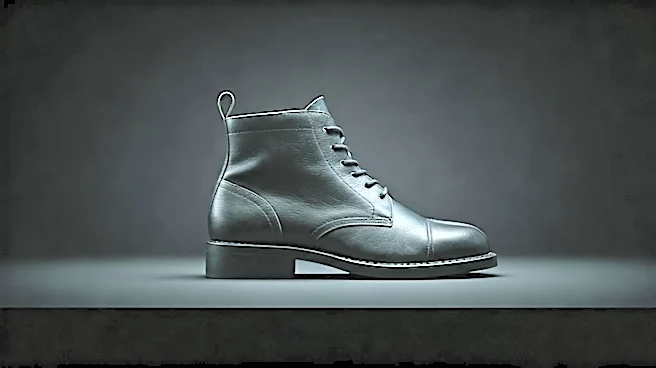
To understand Martin Margiela, you have to understand the Tabi. It’s a boot, but not just any boot. Its defining feature is a split toe, separating the big toe from the others, like a cloven hoof. First appearing in the late 1980s, it was jarring, even
grotesque to some. In a world of elegant stilettos and sensible loafers, the Tabi was an alien. Was it a shoe or a statement? Was it beautiful or bizarre? The answer, as with all things Margiela, was that it was both. The Tabi wasn't designed for conventional beauty; it was designed to make you think. It created an 'invisible' naked foot, grounded and stable, encased in leather. This single, strange design choice encapsulated the designer’s career-long mission: to deconstruct fashion and question our ideas of what is normal, what is luxury, and what is beautiful.
An Idea From a Trip to Japan
The Tabi wasn't born in a Parisian atelier. Its origins trace back to a trip Margiela took to Japan in the 1980s, before he founded his own label. There, he encountered traditional Japanese *tabi* socks, the outdoor footwear worn by workers that featured the same split-toe design. He was captivated. The design wasn’t an aesthetic flourish; it was functional, promoting balance and a connection to the ground. For a designer obsessed with repurposing and recontextualizing everyday objects—turning glove fingers into sweaters or old wigs into coats—this was a lightning bolt of inspiration. He saw the potential to elevate this humble, functional design into high fashion. The challenge was immense. He wanted to create a heeled version, a true boot, but no traditional shoemaker in Italy was willing to produce such a radical design. They thought he was crazy. It took persistence and finding a craftsman willing to take a risk to finally bring the first Tabi boot to life.
The Hoof-Prints of a Revolution
This is the truly 'untold' part of the story, the moment the Tabi became legend. For his debut Spring/Summer 1989 show, Margiela had his strange new boots, but he needed a way to sear them into the memory of the fashion elite. The show was held in a derelict theater in a gritty Paris suburb. The runway was a simple white cotton canvas. Just before the models walked, Margiela had the soles of the Tabi boots slathered in red paint. As the first model stepped onto the pristine white runway, she left a trail of bizarre, cloven hoof-prints. With each step, the evidence of this strange new footwear was stamped onto the fabric of the show itself. The audience couldn't see the boots clearly under the long garments, but they could see the tracks they left behind. It was an act of guerrilla marketing and performance art rolled into one. The next day, when he laid the painted canvas out as a waistcoat for his next collection, the message was clear: the Tabi wasn't just a shoe; it was the footprint of a new era in fashion.
From Freakish to Fashion Staple
The initial reaction was not universal acclaim. Buyers were hesitant. The press was confounded. But the Tabi had done its job: it made people talk. For the early adopters and fashion avant-garde, owning a pair of Tabis was like being in a secret club. It was a signal that you understood Margiela’s intellectual, anti-establishment vision. You weren’t just wearing a shoe; you were wearing an idea. Over the years, Margiela relentlessly reintroduced the Tabi in nearly every collection, transforming it into boots, sneakers, sandals, and flats. What was once seen as freakish slowly became a coveted symbol of artistic credibility. Today, under current creative director John Galliano, the Maison Margiela Tabi is more popular than ever, a certified luxury staple seen on celebrities and influencers worldwide. It has transcended its niche origins to become a permanent, powerful part of the fashion lexicon.