









More Than Just a Semifinal
For casual soccer fans, the 2022 World Cup semifinal was a classic underdog story: Morocco, the first African and Arab nation to reach such a stage, against France, the reigning world champion and its former colonial ruler. The emotional stakes were already
sky-high. But peel back the on-field drama, and you find a narrative deeply woven into the fabric of modern France itself. The French team featured stars with roots across Africa, while several key Moroccan players were born and raised in France and other European nations, products of a diaspora that has reshaped both countries. This wasn't just nation versus nation; it was a family affair, full of complicated loyalties and shared history, played out for the entire world to see.
A History Served in a Tagine
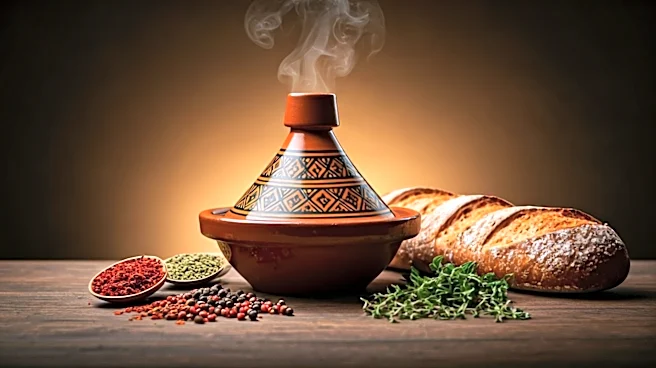
To understand the tension and connection, you have to go back to 1912, when France established a protectorate over Morocco, a colonial rule that lasted until 1956. In the decades that followed independence, hundreds of thousands of Moroccans emigrated to France seeking work and opportunity. They brought with them their faith, their language, and, crucially, their recipes. In the often-unwelcoming housing projects of French cities, the aromas of simmering tagines and steaming couscous became potent symbols of home—a culinary anchor in a foreign land. Food wasn't just sustenance; it was a vessel for memory, identity, and community. The kitchen became a space to preserve a culture that often felt under siege in the public square.
The 'Couscous Question' in France
Here’s where it gets fascinating. Over time, that immigrant food became French food. Couscous, the humble Berber dish of steamed semolina, is now consistently ranked as one of France’s favorite dishes, sometimes even surpassing classics like boeuf bourguignon. On the surface, this looks like a beautiful story of integration. A North African staple embraced by the nation. But it’s also a flashpoint. Many see it as a perfect example of what some call “gastronomic appropriation”—where the food is celebrated and consumed, but the people who brought it continue to face discrimination and are pressured to assimilate. The French love for couscous is real, but it exists alongside intense political debates about immigration, secularism, and what it means to be French. You can love the tagine but not the person who cooked it. This contradiction is at the heart of the Franco-Moroccan experience.
Pride, Plated and Played
This is the layer that casual fans might have missed. Every dazzling run by Morocco’s Sofiane Boufal (born in Paris) or Achraf Hakimi (born in Madrid) was a moment of vicarious triumph for millions in the Moroccan diaspora. Their success on the world’s biggest stage was a powerful rebuttal to the everyday experience of being seen as “other” in their own birth countries. It was a declaration that they were not just French, Spanish, or Dutch, but also proudly Moroccan—a complex identity they refused to simplify. In the same way that couscous has become an undeniable, if complicated, part of the French culinary landscape, these players were asserting their own undeniable place in the European soccer landscape. The pride wasn't just about winning a game; it was about being seen, fully and without compromise.