







The Perfect Sci-Fi Destination
Long before it was a data point for astronomers, Tau Ceti was a staple of science fiction. Located just under 12 light-years away, it’s our closest solitary sun-like star, making it an obvious candidate for stories about humanity’s first steps into the
galaxy. Writers from Isaac Asimov to C.J. Cherryh and Kim Stanley Robinson have set stories in the Tau Ceti system. The star became a kind of shorthand for a plausible, reachable frontier—a place where humanity could start anew. The reality is just as tantalizing. Tau Ceti is a stable, G-type star, much like our own sun, though slightly smaller and older. This stability made it one of the very first targets for the Search for Extraterrestrial Intelligence (SETI) in 1960 with Project Ozma, where astronomers listened for artificial radio signals, hoping to hear from a cosmic neighbor. Though that search came up empty, the allure of Tau Ceti only grew as technology advanced, eventually revealing a system of potential planets.
Worlds of Tomorrow, Today
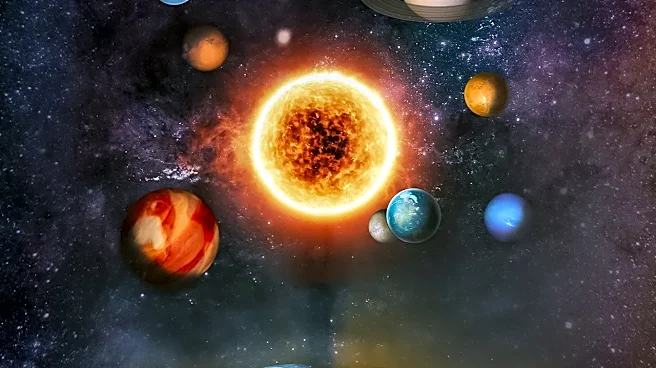
The planets of classic sci-fi were often just Earth with a different coat of paint—rocky deserts, lush jungles, or gleaming alien cities. The reality of Tau Ceti’s planets is more complex and, in some ways, more fascinating. Over the years, studies have proposed several planets orbiting the star, including a few “super-Earths” more massive than our own world. Two candidates, Tau Ceti e and f, have generated particular excitement because their orbits place them within or near the star's habitable zone—the region where liquid water could potentially exist on a planet's surface. However, being in the zone isn't a guarantee of habitability. Tau Ceti e might be a scorching "super-Venus," while Tau Ceti f may have only recently entered the habitable zone as the star aged. Furthermore, the system is surrounded by a massive debris disk, meaning any planet orbiting within it would face far more asteroid and comet impacts than Earth, posing a significant hurdle for the development of life.
From Rocket Ships to Laser Sails
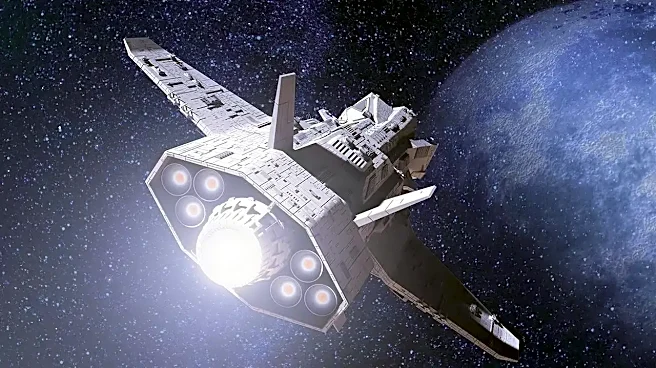
In the Saturday matinees, interstellar travel was simple: climb into a sleek, finned rocket ship and blast off. The scientific reality of crossing the 12 light-years to Tau Ceti is monumentally more difficult. A conventional rocket would take tens of thousands of years to make the journey. This is where modern science begins to look just as imaginative as old fiction. The leading concept for an interstellar mission is Breakthrough Starshot, a project that aims to send tiny, gram-scale "nanocraft" to our neighboring stars. Instead of carrying fuel, these probes would be attached to lightsails and pushed by a massive, ground-based laser array, potentially reaching speeds up to 20% of the speed of light. At that velocity, a flyby mission could reach a nearby star like Proxima Centauri in about 20 years, a model that could be adapted for a future Tau Ceti mission. The concept is a radical departure from the lumbering starships of fiction, but it shares the same audacious goal: to send a piece of humanity to another star system.
The Unchanging Spirit of Adventure
While there is no single, funded "Tau Ceti Mission" currently warming up on a launchpad, the star system remains a powerful symbol in both science and culture. From its appearance in video games like Starfield to its role in novels like Project Hail Mary, Tau Ceti continues to represent a tangible goal for human exploration. The methods have evolved from fictional warp drives to theoretical laser sails, and our understanding of its planets has shifted from imaginative speculation to data-driven modeling. But the underlying impulse remains unchanged. The desire to know what lies beyond our cosmic shores—to explore new worlds and maybe, just maybe, find life—is the same engine that powered the heroes of the Saturday matinee. That sense of wonder, that belief in a grander adventure waiting among the stars, is the timeless DNA connecting the dreams of the past with the scientific ambitions of the future.