




From Canvas to Catwalk
First, a quick refresher. In the early 20th century, artists like Pablo Picasso and Georges Braque shattered the rules of painting. Cubism abandoned the idea of a single, fixed viewpoint, instead breaking down subjects into geometric forms and reassembling
them to show multiple perspectives at once. It was radical, abstract, and focused on structure over realistic depiction. This revolutionary concept didn't stay on the canvas for long. Designers in the 1910s and 20s saw a parallel liberation for fashion. As corsets disappeared, a new, more linear silhouette emerged, and the principles of Cubism provided the perfect vocabulary for this modern look. Early adopters like Sonia Delaunay and Madeleine Vionnet began creating garments that treated the body as a canvas for geometric exploration, using fabric panels like fragmented planes of color.
The Anatomy of a Cubist Look
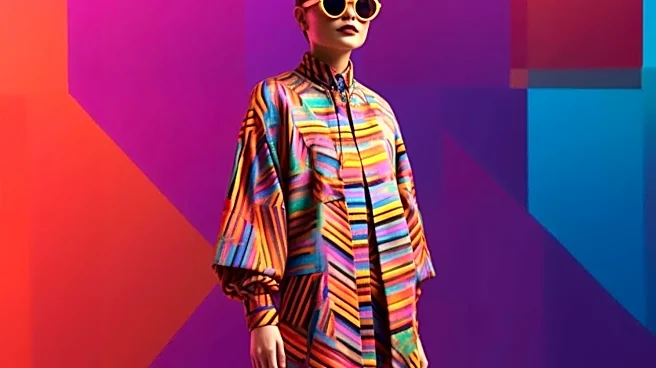
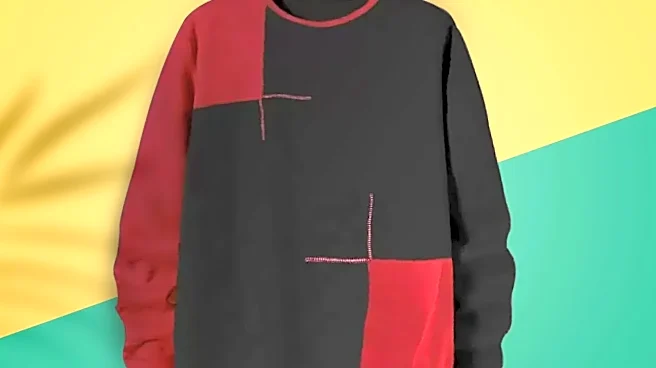
So what defines this aesthetic? The headline ingredients—angles, panels, and split color—are the core components. Think of it as fashion deconstructed. Instead of a single piece of fabric shaped to the body, these garments are built from distinct, often asymmetrical sections sewn together to create a new structure. This technique, known as paneling, allows designers to play with shape in a sculptural way. Color blocking is another key feature. Rather than a floral print, a Cubist-inspired dress might feature large, distinct fields of solid color, with sharp, clean lines separating them. This emphasizes the garment's construction and creates a bold, graphic effect. The overall look is less about hugging curves and more about creating them, using fabric to build an architectural form that exists independently of the body.
Modern Heirs to a Radical Idea
The influence of Cubism never really faded; it simply evolved. In the 1960s, designers like Paco Rabanne took the idea of assemblage to an extreme, creating his 'unwearable' dresses from linked metal and plastic plates—the ultimate expression of a garment built from modular, geometric parts. Today, the spirit lives on in the work of avant-garde and architectural designers. The Japanese master Issey Miyake, for instance, built his career on transforming single pieces of cloth into three-dimensional, pleated structures that stand away from the body, creating a space between the wearer and the fabric. His work is a direct descendant of the Cubist idea of creating form rather than just covering it. Similarly, Rei Kawakubo of Comme des Garçons has famously challenged the very idea of a silhouette, with collections that use padding and geometric shapes to build entirely new, abstract forms around the body.
Wearing a Piece of Art
Ultimately, a Cubist-inspired outfit is a statement. It’s for someone who appreciates that fashion can be more than just pretty or flattering in a conventional sense. It's clothing as intellectual exercise and wearable sculpture. The sharp angles might not feel soft, and the paneled construction might not follow the body’s natural lines, but that’s precisely the point. It’s an approach that celebrates the artificiality and artistry of getting dressed. By wearing these geometric, fragmented designs, you are participating in a century-long conversation between art and fashion, connecting your personal style back to a revolutionary movement that taught the world to see things from a new angle.