


A Crisis of Ambition
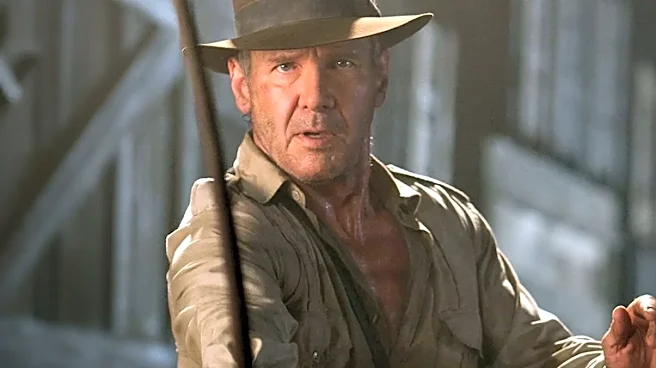
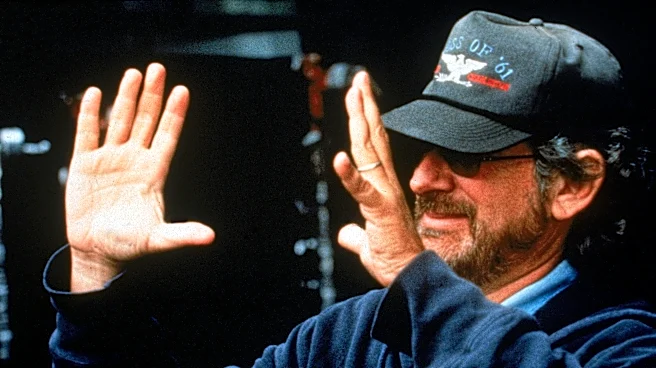
There was no single, headline-grabbing crisis on the set of 'Indiana Jones and the Last Crusade'. Instead, the 'crisis' was one of sheer ambition. Director Steven Spielberg was determined to top the action of the first two films, creating set pieces so
complex they barely existed on the page. The legendary tank chase, for instance, was summarized in the script with a single line. Spielberg, along with his storyboard artists, expanded that into a ten-minute sequence that would become the film's centerpiece. This approach defined the production: dream up the most thrilling spectacle imaginable, and then challenge the effects crew to invent a way to make it happen. For mechanical effects supervisor George Gibbs, who called it the most difficult film of his career, this meant that nearly every major sequence presented a logistical nightmare that could only be solved with old-school, hands-on ingenuity.
The Lumbering Tank That Could
The desert tank chase is a masterclass in movie magic, born from a very real-world problem: tanks are slow. The custom-built, 28-ton behemoth, constructed on the chassis of an excavator, could only manage about 12 miles per hour. To create the illusion of speed, especially with a galloping horse alongside, the crew had to under-crank the camera, forcing Harrison Ford's stunt doubles to ride the horse at a deceptively slow pace. The tank itself was a marvel of problem-solving. Gibbs and his team built the main vehicle from scratch after deciding a real World War I museum piece was too small. For close-ups and stunts involving actors on the roof, a lighter, safer aluminum section with rubber tracks was towed by a truck. And for the grand finale where the tank plunges over a cliff? That was a highly detailed, quarter-scale model launched off a 50-foot cliff, seamlessly blended with matte paintings and full-scale shots to create the epic illusion.
Making a Splash in Venice
The Venice boat chase presented a different set of obstacles. First, Spielberg secured unprecedented permission to control a section of the Grand Canal for a morning, a logistical feat in itself. But the real challenge was the sequence's destructive climax, where one of the classic wooden speedboats is chewed to pieces by a massive ship's propeller. This wasn't a miniature or a camera trick. The crew built an enormous propeller rig on a partial ship set in a studio tank. The speedboat, one of several Chris-Craft replicas made for the chase, was rigged to a track and pulled directly into the churning blades. To give the destruction extra visual punch, the effects team packed the back of the boat with explosives, ensuring the vessel's demise was as spectacular and tangible as possible. It was a one-take shot, a testament to practical effects where you have to get it right the first time.
Zeppelins, Biplanes, and Untrainable Birds
The aerial escape via Zeppelin also relied heavily on practical wizardry. The opulent interior was a set, famously hot enough that Sean Connery and Harrison Ford filmed their scenes without trousers on under the table. For the exterior shots, the ILM model shop built a detailed eight-foot miniature Zeppelin, filming it with motion-control cameras to be composited into sky backgrounds. When Indy and his father escape in the attached biplane, the production blended full-size mock-ups for the actors with larger-scale models for the flight sequences. Even a seemingly simple shot, like seagulls scattering on a beach to bring down a pursuing fighter plane, required a clever workaround. Real seagulls proved untrainable and weren't even available during their nesting season. The solution? The crew used a combination of plaster dummy gulls for the beach shots and trained white doves for the close-ups of the birds taking flight.