






The Irresistible Pull of the What Stage
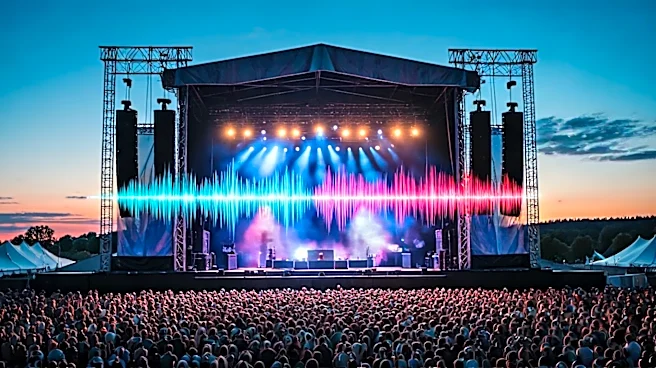
Let’s be honest: there’s nothing quite like standing in a field with 80,000 other people, all singing along to a legacy act or a chart-topping megastar on Bonnaroo’s iconic What Stage. It’s a rite of passage. The scale is immense, the production is dazzling,
and the sense of a shared cultural moment is powerful. This is the set you can tell your friends back home about, the one they’ll recognize. It’s the safe bet, the guaranteed good time. Headliners are headliners for a reason; they deliver polished, powerful, and crowd-pleasing performances. But relying solely on the What Stage for your festival experience is like going to a world-class restaurant and only ordering the french fries. You’re missing the chef’s most creative dishes.
The Case for the Tents and Tents
The heart of Bonnaroo beats loudest inside the tents. This Tent, That Tent, The Other Tent—this is where musical careers are forged and legends are born. The intimacy is the first thing you notice. You’re not a speck in a sprawling field; you’re part of a sweaty, pulsing organism, sharing the same air as the artist. The sound, unburdened by wind and distance, is often punchier and more direct. It’s in these spaces that you find the hungry artists, the ones with everything to prove. Think of Chance the Rapper’s early, anarchic sets at the festival, performances so packed with energy and promise they became the stuff of Roo lore long before he became a headliner himself. Or consider the year Sturgill Simpson essentially set a tent on fire with a blistering, no-nonsense country-rock set that felt more real and immediate than anything happening a half-mile away on the main stage. These aren’t just concerts; they’re discoveries.
The Superjam: A Once-in-a-Lifetime Spectacle
Nowhere is the small-stage argument more potent than with Bonnaroo’s signature event: the Superjam. This isn’t a normal set. It’s a one-night-only musical Frankenstein, where a guest curator assembles a wild, unpredictable collection of musicians from across the festival lineup (and beyond) to play a themed set of covers. These are moments that cannot be replicated. The legendary 2013 Rock N’ Soul Dance Party, curated by Jim James and featuring John Oates, R. Kelly, and members of My Morning Jacket, wasn’t just a great set; it was a singular event in music history that only the few thousand people crammed into a tent got to witness. Your favorite headliner will play their hits on tour next year. You will never, ever see that specific Superjam again. The chance to witness that spontaneous, unrepeatable magic is a core part of the Bonnaroo DNA.
Finding the Headliner of Tomorrow
The artists playing the smaller stages aren’t just hidden gems; they are a preview of the future. The act you stumble upon at 4 p.m. on a Thursday in 2026 could very well be the main stage headliner in 2030. There's a unique thrill in seeing an artist in their raw, ascendant phase, before the stadium-sized production and the weight of expectation sets in. You get to be part of their story. You can say, “I saw them when…” and actually mean it. This transforms you from a passive consumer of music into an active participant in the culture. It rewards curiosity. Wandering away from the main-stage path and taking a chance on an unknown name isn't a risk; it's an investment in your own future festival memories.