






The Reign of the Volume Stage
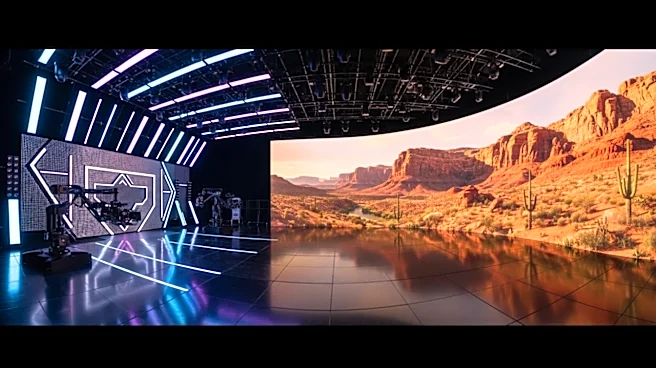
If you’ve been wowed by the seamless, otherworldly landscapes of shows like “The Mandalorian,” you have the “Volume” to thank. Pioneered by Industrial Light & Magic, the Volume is a revolutionary production environment where massive, high-resolution LED
screens wrap around a soundstage, creating a digital backdrop in real time. Instead of acting against a green screen and imagining a world that will be added months later, performers are immersed in the actual environment they’re meant to be in. This technology offers incredible control. Directors can summon “golden hour” for an entire 12-hour shoot day, eliminate weather concerns, and capture photorealistic lighting and reflections directly in-camera, dramatically cutting post-production time. Powered by video game engines like Unreal Engine, the virtual set’s perspective shifts in perfect sync with the camera’s movement, creating a flawless illusion of depth. It’s a paradigm shift that promises cost savings by reducing travel and streamlining the production pipeline.
The Limits of the Digital Domain
But the Volume is not a silver bullet. For all its power, it has limitations. The up-front cost of building or renting an LED stage is immense, and it requires a new kind of production pipeline where key creative decisions are locked in much earlier. The digital assets for the background must be designed, built, and tested long before the cameras roll, shifting a huge amount of work into pre-production. Creatively, some filmmakers feel constrained by the physical size of the stage and the digital nature of the world. The screens can struggle with very wide shots or fast action, and there's a risk of a certain polished, artificial look if not managed carefully. This has led some productions to seek a different path—one that combines the authenticity of the real world with the power of modern technology.
The Odyssey: A Return to the Real World
Enter the “Odyssey” strategy. This isn’t a single product, but a philosophy representing a counter-movement: a tech-enhanced return to on-location filmmaking. Instead of bringing the world into a studio, this approach takes advanced, often more portable, tools out into the world. It’s a hybrid model that champions the tangible realism of physical locations—the unpredictable beauty of natural light, the texture of a real environment, and the organic performances it can inspire. This strategy doesn't shun technology; it integrates it. Think smaller, mobile digital tools, advanced drone cinematography for breathtaking aerials, and sophisticated set-extension techniques that blend a real foreground with a digitally created background. By using real locations as a base, this method aims to capture an authenticity that can sometimes be lost inside the pristine confines of a Volume, arguing that reality is hard to fake.
Cost, Control, and Creative Choice
The choice between these two models comes down to a series of trade-offs. The Volume offers unparalleled control over light and environment, making it incredibly efficient for scenes set in one or two complex, fantastical locations. This can save money on travel, permits, and weather delays. However, the initial investment is high, and it's not always cost-effective for simpler productions. The Odyssey strategy embraces the logistical challenges of location shooting—permits, travel, weather—for the sake of authenticity and scale that a Volume can’t easily replicate. While it may seem more expensive on paper due to variable costs, it can sometimes be the more practical choice, especially when a story is grounded in real-world environments. Ultimately, it's a decision about where to spend the money: on front-loaded digital asset creation for a Volume, or on the logistics of a global production.