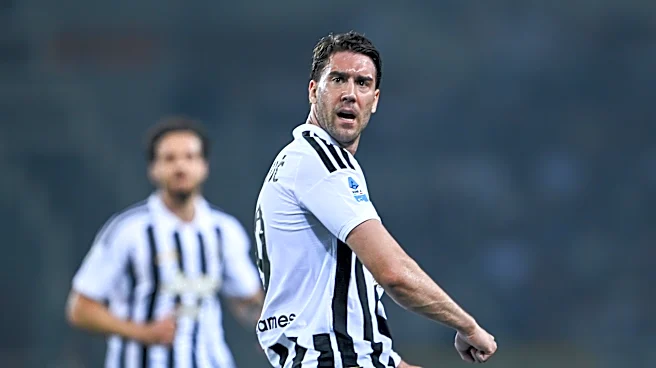

David Villa vs. Manchester United, 2011
The setting: the Champions League Final at Wembley. The team: Pep Guardiola’s Barcelona, perhaps the greatest club side ever assembled. In basketball terms, Lionel Messi was the Steph Curry of this squad—a player whose mere presence bent the entire defense
out of shape. For their third goal, Messi drives toward the box, pulling defenders toward him like moons in a planet’s orbit. This is the soccer equivalent of a point guard driving the lane and drawing a double team. His gravity opens up a massive zone at the top of the arc. The ball is worked to Sergio Busquets, who lays it off to an unmarked David Villa. With the entire defense sucked in by Messi, Villa has all the time and space he needs—a wide-open three-pointer—to curl a perfect shot into the top corner. It was a goal created not by Villa’s final touch, but by the space Messi’s movement manufactured.
Jack Wilshere vs. Norwich City, 2013
This is less about spacing the floor and more about creating a lightning-fast lane to the rim through a packed defense. Arsenal’s goal, finished by Jack Wilshere, is a symphony of one-touch passing. Think of the 2014 San Antonio Spurs at their best, moving the ball so quickly the defense can't react. Wilshere initiates the play near midfield and then keeps running. He and striker Olivier Giroud engage in a series of impossibly quick, intuitive give-and-gos. Each pass is a feint, a jab that moves a defender a half-step in the wrong direction. The final flick from Giroud is a perfectly weighted bounce pass that finds Wilshere, who has continued his sprint, bursting through a suddenly non-existent backline to tap the ball in. They didn’t need to spread out because their passing created a temporary, surgical corridor of open space right through the heart of the defense.
Germany vs. Brazil, 2014 World Cup
This entire game was a terrifying example of what happens when one team understands space and the other completely forgets it exists. For Germany’s third goal in their historic 7-1 demolition, the Brazilian defense was in a state of utter panic. In basketball, it’s like a broken press where everyone is trapping the wrong person. As the ball enters the box, multiple German players make intelligent, unselfish runs. Toni Kroos hangs back at the edge of the area, completely unmarked. The ball is cut back, and just like Villa in 2011, Kroos has a wide-open look from a high-percentage area. What makes this a masterclass in spacing is the movement of Thomas Müller, who drags his defender away from the play, and Miroslav Klose, who occupies the central defenders. Their runs were decoys, creating a pocket of prime real estate for Kroos to stride into and score with ease.
İlkay Gündoğan vs. Manchester United, 2018
If the Wilshere goal was a quick-hitter, this was the ultimate display of offensive patience—the soccer version of a 24-second shot clock violation that ends in a dunk. Pep Guardiola’s Manchester City completed 44 uninterrupted passes leading up to this goal. They moved the ball from side to side, stretching the Manchester United defense horizontally until it was thin and brittle. Players held their positions, forcing their markers to choose between staying with them or pressing the ball. This constant shifting is designed to create a single, fatal opening. It finally came when Raheem Sterling, holding the width on the left, floated a cross over the top. İlkay Gündoğan, a midfielder, had made a late run into the box, ghosting into a space vacated by a defense that had been pulled apart for nearly two minutes. He chested it down and finished, a simple end to a profoundly complex spatial problem.
Mohamed Salah vs. Manchester City, 2018
This is the fast break. In a crucial Champions League quarterfinal, Liverpool absorbed pressure from Manchester City and then sprung a devastating counter-attack. When the ball was won, City had committed players forward, leaving vast green space behind them. Mohamed Salah picked up the ball deep in his own half and started running. He had Sadio Mané and Alex Oxlade-Chamberlain making hard sprints to his left and right, creating a three-on-two situation. This is pure basketball transition offense. The runners stretch the remaining defenders, forcing them to make impossible choices. Who do you cover? Salah drives at the heart of the defense, freezes the center-back, and then attempts a pass. The ball is blocked but spills right back to him, and with the keeper already committed, he chips it coolly into the net. The goal was a result of sheer speed, yes, but also of players running into the correct lanes to maximize space and overwhelm the opposition.