

Horror on a Shoestring Budget
When John Carpenter set out to make 'Halloween' in 1978, the production was famously low-budget. There was no money for a fancy effects studio to design a unique mask for its silent, stalking villain, referred to in the script simply as 'The Shape'. The crew
needed something cheap, readily available, and, most importantly, terrifying. The task fell to production designer and editor Tommy Lee Wallace, who headed to a Hollywood Boulevard costume shop with only a few dollars and a crucial mission.
A 'Star Trek' Discovery
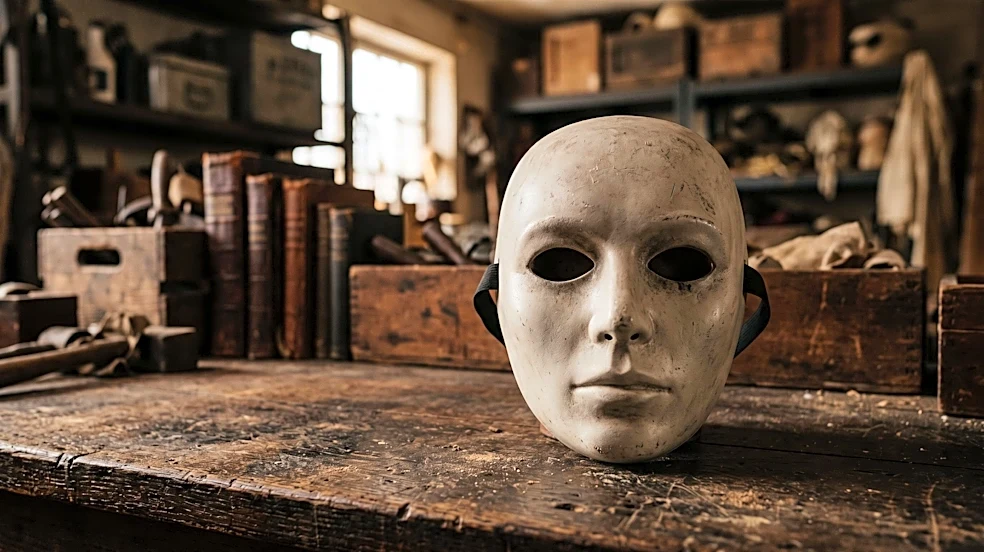
Wallace returned with a few options. One was an Emmett Kelly clown mask, a creepy but perhaps too specific choice. The other was a Captain Kirk mask, based on a life cast of actor William Shatner from his 'Star Trek' days. It was a mass-produced novelty item from Don Post Studios, costing under two dollars. On its own, it looked goofy and benign. But Carpenter and Wallace saw potential in its blank, human-like features. The Captain Kirk mask, intended to let fans look like a sci-fi hero, was about to be reborn as a monster.
The Terrifying Transformation
The genius was in the modifications. Wallace didn't just put the Kirk mask on the actor; he transformed it. He reportedly widened the eye holes, tore off the sideburns and eyebrows, and spray-painted the entire face a ghostly white. The hair was teased and darkened, giving it a messy, unhinged look. The result was immediate and chilling. The familiar, friendly face of Captain Kirk vanished, replaced by a featureless, cold visage. It was human, but not quite. The crew knew they had found their monster. William Shatner himself was unaware for years, later finding it humorously bizarre that his face had become a symbol of horror.
The Psychology of a Blank Slate
The mask’s effectiveness isn't just about its altered appearance; it’s about what it doesn't show. The blank, emotionless expression strips Michael Myers of all humanity. It turns him from a man into a 'shape'—an unstoppable force of nature. Psychologically, the mask functions as a blank slate onto which audiences project their own deepest fears. Is he angry? Is he gleeful? Is he completely empty inside? The mask never answers, and that ambiguity is terrifying. It taps into the uncanny valley, looking almost human but being unnervingly 'off', creating a profound sense of unease. It suggests that the evil beneath is unknowable and absolute.
An Enduring, Evolving Legacy
Across more than a dozen films, the mask has become as central to the character as his signature kitchen knife. While its appearance has varied significantly through the sequels—sometimes to the dismay of fans who noted changes in shape, color, and even expression—the 1978 original remains the gold standard. In the 2018 sequel, which ignores all previous follow-ups, the mask is presented as the very same one from 40 years prior, now aged, cracked, and decayed. This choice reinforced its iconic status, treating it less like a prop and more like a sacred relic of horror cinema. The story of its creation is a testament to how creative constraints can lead to legendary results, proving that sometimes the most terrifying monsters are born from the most ordinary things.