





It Starts with the Sheep
The secret to a Nordic sweater’s longevity begins with the wool itself. Sheep breeds native to these cold, harsh climates, like the Icelandic sheep, have developed a unique fleece to survive. Their wool is famously dual-coated. The outer layer, called
'tog,' consists of long, coarse, water-resistant fibers. The inner layer, 'þel,' is fine, soft, and insulating. When spun together into a yarn like traditional Lopi, these two fiber types create a material that is both incredibly warm and naturally weather-resistant. This combination provides a robust starting point that is far more durable than many other types of wool.
The Fiber's Hidden Superpower: Crimp
On a microscopic level, wool fiber has a hidden superpower: crimp. This is the natural, three-dimensional wave or zig-zag pattern in each strand. Crimp comes from two different types of cells that grow at slightly different rates, causing the fiber to bend. Think of it as millions of tiny, coiled springs. This spring-like structure is what gives wool its incredible elasticity and resilience. A single wool fiber can be stretched up to 30% of its length and will still bounce back to its original shape. This inherent 'memory' prevents the garment from sagging or becoming misshapen after being worn, stretched, or compressed.
Engineering with Needles
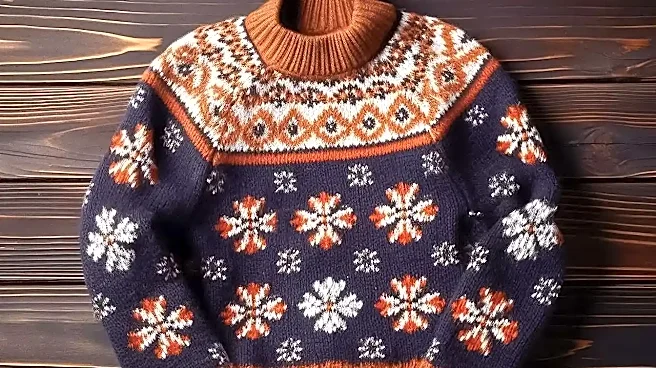
Knitting isn't just a craft; it’s a form of structural engineering. The way the yarn is looped together creates the final fabric, and different stitch patterns have different mechanical properties. For example, the ubiquitous ribbing you see on the cuffs, hem, and neckline of a sweater is there for a reason. Its structure acts like an accordion, allowing those areas to stretch for a snug fit and then snap back into place. More complex patterns found in Nordic knitting, like intricate cables or dense, stranded colorwork (as seen in Fair Isle or Selbuvotter styles), add significant dimensional stability. These techniques create a thicker, less-stretchy fabric that reinforces the sweater's overall structure, helping it maintain its intended fit for years.
Setting the Shape with Water and Heat
The final piece of the puzzle is a process knitters call “blocking.” After a sweater is knit, it's typically washed or steamed and then laid out to dry in its precise, final dimensions. This isn't just about cleaning the garment. At a molecular level, wool is made of keratin proteins held together by different types of bonds. When wool gets wet, weaker hydrogen bonds break, making the fibers more malleable. By shaping the sweater while it's damp and letting it dry, new hydrogen bonds form, effectively locking the stitches and the overall garment into the correct shape and size. This one-time setting process gives the sweater its final drape and ensures the pattern details are perfectly defined, creating a memory that the garment will retain through future wears.