






The Real Trick Is Hidden Inside
The secret to a weightless appearance isn't one single seaming trick, but rather the genius of the gown's hidden inner architecture. Most of the work that makes a dress float is done by layers you never see. Think of it like a skyscraper: the elegant
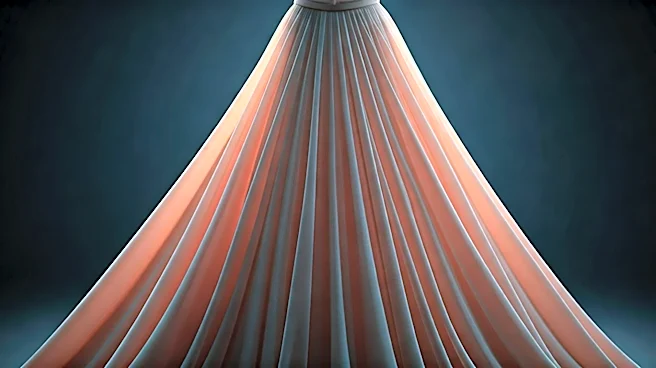
glass facade is only possible because of the steel frame doing all the heavy lifting. In couture, this internal structure can include a meticulously crafted inner corset, boning, and foundation fabrics that support the entire garment. This inner framework is designed to carry the load of heavy materials and intricate embellishments, distributing the weight across the torso so the outer fabric can drape and move as if it's weightless. A well-made gown is built from the inside out, which is why it can feel surprisingly light and comfortable to the wearer despite its opulent appearance.
Letting the Fabric Defy the Seam
One of the most powerful techniques for creating fluidity is the bias cut, pioneered by French couturier Madeleine Vionnet in the 1920s. Woven fabric has a vertical and horizontal grain, but the 'true bias' runs at a 45-degree angle. Cutting pattern pieces on this diagonal allows the fabric to gain mechanical stretch and drape in a way that straight-grain cutting doesn't. It clings to the body's curves naturally, creating a liquid-like silhouette that seems to pour over the wearer. This technique reduces the need for bulky darts and constricting seams to create shape, letting the fabric's own fluid movement become the star. Handling fabric on the bias is incredibly difficult as it stretches and warps, requiring immense skill, but the result is a garment that moves with an ethereal quality.
Seams So Fine, They Disappear
While internal structure and bias cutting reduce the need for seams, the seams that do exist in couture are masterpieces of subtlety. Instead of a standard machine-sewn seam, which can be bulky, couturiers use hand-finishing techniques that are strong yet almost invisible. The French seam is a classic example: the seam is sewn twice, encasing the raw edges within a tiny, clean fold of fabric. This is perfect for sheer or lightweight fabrics. Another method is the hand-overcast or whipped seam, where the edge is finished with tiny, delicate stitches that prevent fraying without adding any weight or bulk, which is crucial when working with fine silks. For some applications, a Hong Kong finish binds the seam edge with a strip of lightweight fabric, creating a beautiful interior detail while keeping the seam flat and unobtrusive.
The Power of Illusion Netting and Underlays
For gowns heavy with beading, pearls, or embroidery, another trick comes into play: illusion netting. This is a very fine, strong, and sheer tulle that is often flesh-toned. Designers use it as a base for elaborate embellishments. From a distance, the beads and crystals appear to be floating directly on the skin. This technique provides the necessary support for heavy details without the visual weight of an opaque fabric. Similarly, an underlay of a fabric like silk organza can be used beneath a more delicate fashion fabric. The organza provides structure and strength, allowing the flimsy outer layer to drape beautifully without being stressed by its own weight or the pull of a seam. This layered construction is a core principle of couture, creating stability from within so that the exterior can remain fluid and light.