








An Epic Reimagined as Horror
Forget the sanitized version you may have read in high school. Early reactions to Nolan’s film confirm this is not a straightforward swords-and-sandals adventure. Instead, it’s being described as a grueling psychological thriller that leans heavily into
horror. Reviews highlight a terrifying, Goya-esque Cyclops, unsettling body horror during the Circe sequence, and a pervasive sense of primal dread. The film treats Odysseus's journey not as a series of heroic obstacles but as a punishing, purgatorial reckoning for his actions at Troy. This is an adaptation more interested in the psychological scars of its hero than his triumphs, framing the epic poem as a story of survival and trauma. In this landscape of visceral horror and moral ambiguity, every casting choice becomes a statement of intent.
A Career Built on The Bizarre
To understand why Pattinson’s casting is so significant, one has to look at the deliberate, almost rebellious, career he built after 'Twilight.' Shunning the easy path of a romantic lead, he dove headfirst into the world of auteur cinema, actively seeking out roles that were challenging and often physically and morally repellent. He cultivated a reputation for playing desperate, grimy, and intense characters in films like the Safdie brothers' 'Good Time' and Robert Eggers' 'The Lighthouse.' In these roles, he wasn’t just acting; he was transforming, embodying a kind of 'refreshing oddball eccentricity' that set him apart from his polished peers. This decade-long detour into the strange and unsettling has forged a unique screen presence: when Pattinson shows up, you know the film is willing to get weird.
The Perfect Pathetic Villain
Pattinson does not play a god or a monster in 'The Odyssey.' Instead, he portrays a human antagonist, with early reviews describing his performance as a scene-stealing turn full of 'weaselly, volatile cowardice.' The comparison being made is to Joaquin Phoenix’s masterful portrayal of Commodus in 'Gladiator'—a villain whose danger comes not from his strength, but from his pathetic weakness and unpredictability. This kind of antagonist is far more unsettling than a mythical beast. It grounds the epic’s grandiosity in a very recognizable, very human form of unpleasantness. By casting an actor known for embracing the unglamorous and the grotesque, Nolan signals that the film's threats are not just external and supernatural but also internal and psychological. Pattinson’s presence promises a villain who is not just a foil for the hero, but a dark mirror to the world’s moral decay.
A Statement of Artistic Intent
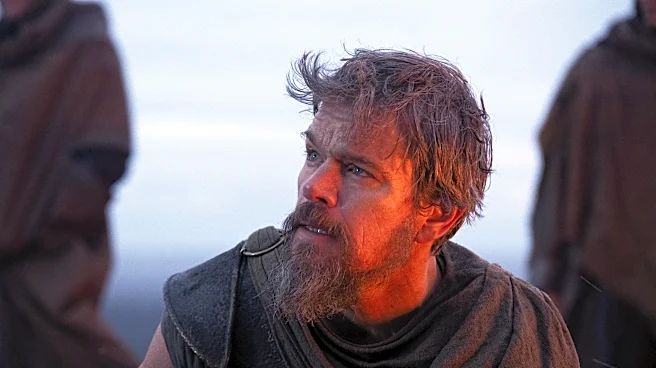
Ultimately, Pattinson’s role is a crucial part of the film's overall tonal architecture. Nolan’s 'Odyssey' is a massive, technically ambitious film, but its soul lies in its exploration of a hero consumed by guilt and trauma. Having Matt Damon’s rugged, vulnerable Odysseus face off against a sniveling, dangerously pathetic man played by Pattinson reinforces the central theme. The conflict is not just about a hero trying to get home; it’s about a damaged man navigating a world where the horrors are both monstrous and deeply human. Pattinson is the embodiment of the latter. His casting works in concert with the film's other dark elements to expand the story's possibilities beyond a simple epic, turning it into a rich, disturbing, and complex character study.