





The Default Fate: Rags and Remnants
For most of human history, old clothes had two destinations: the rag pile or another person’s back. Fabric was a valuable commodity, produced through intensive labor. Garments were worn, mended, passed down, and repurposed until they literally fell apart.
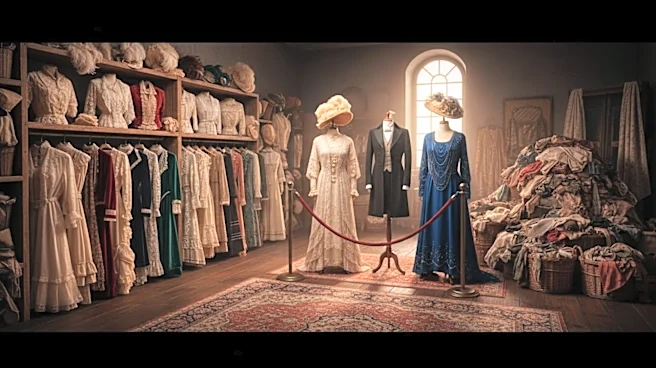
An upper-class Edwardian lady’s intricate lace dress might eventually become a middle-class child’s frock trimming, then finally a cleaning rag. There was no concept of “vintage” as a style choice; there was only “used,” a category born of necessity. The idea of a shop dedicated to selling 50-year-old clothing for its aesthetic value would have been absurd. The 'different' way these shops almost looked was, quite simply, not at all. The default path was for these delicate silks and cottons to be used up and vanish completely.
A Fork in the Road: Museum or Market?
As the 20th century progressed, a new consciousness emerged. Some exceptionally fine or historically significant garments, including those from the Edwardian era, were recognized for their cultural value. This presented a critical fork in the road: would old clothes be treated like art, destined for sterile museum archives, or could they be part of a commercial market for everyday people? For a long time, the museum path seemed more likely. Antique textiles were viewed as too fragile and precious to be worn. Collectors and curators sought to preserve them as historical artifacts, not as fashion. If this had been the only route, your local 'vintage' store might be a sterile gallery where you could look but not touch, and certainly not buy that 1908 lawn dress to wear to a garden party.
The Theatrical Interlude
Before vintage became fashion, it became costume. The rise of theater and the birth of Hollywood created a voracious appetite for historical clothing. Why build a new Edwardian-style wardrobe when you could buy original, authentic pieces for a fraction of the cost? This created a new kind of market, one where old clothes were valued for their ability to tell a story on stage or screen. Shops emerged that looked less like the curated boutiques of today and more like sprawling costume rental warehouses. This was a crucial step away from the rag pile, giving old garments a new economic life. But it was a life in service of performance, not personal style. The shops looked different because their purpose was different: to outfit a production, not an individual looking to make a fashion statement.
The Counter-Culture Catalyst
The real revolution happened in the 1960s. Young people in London and San Francisco, rejecting the consumerist, mass-produced fashions of their parents, began looking to the past. Hippies and mods descended on flea markets and second-hand shops, unearthing Victorian lace, military jackets, and, yes, delicate Edwardian dresses. This wasn't about necessity; it was a conscious act of rebellion and self-expression. Suddenly, wearing old clothes was cool, a statement against the mainstream. This counter-culture demand created the modern vintage shop: a curated space that blended history, style, and individuality. It rescued Edwardian fashion from the exclusive domains of museums and costume houses, placing it back on the street as a wearable piece of history. This movement is what ensured the vintage shop in your neighborhood has a fashion section, not just a historical archive.