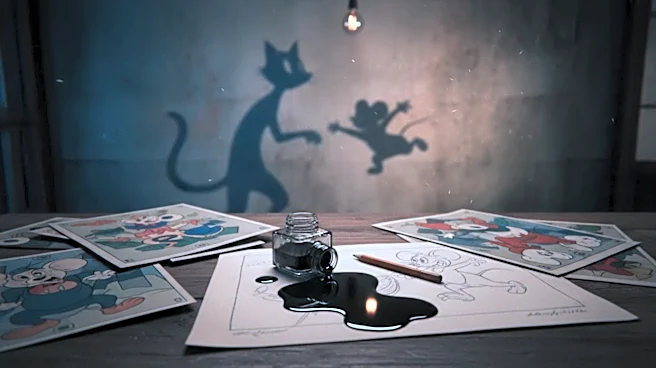











The Myth of the Final Farewell
If you’ve spent enough time online, you’ve likely stumbled upon the story. It concerns a so-called “lost finale” of Tom and Jerry, an episode so dark it was supposedly banned. The tale describes an episode titled “Blue Cat Blues,” where Tom, utterly defeated
by a gold-digging love interest, gives up completely. He sits on a railroad track, waiting for the end. Jerry, after suffering his own brutal romantic rejection, joins his longtime frenemy. The screen fades to black as a train whistle grows louder, implying a joint suicide that concludes the entire series on the bleakest note imaginable. It’s a shocking and potent story, one that reframes decades of lighthearted slapstick as a long prelude to a shared tragedy. This version of the finale has become a legendary piece of internet lore, a classic “childhood ruined” creepypasta that has convinced millions that the iconic duo met a grim, and permanent, end.
The Reality: Not the End, Not Even Close
Here's the truth: while the episode “Blue Cat Blues” is very real, it is not, and was never intended to be, the series finale. The short first aired on November 16, 1956, and it was the 103rd theatrical short produced by the original creators, William Hanna and Joseph Barbera. After this supposedly final, tragic episode, the duo went on to star in 11 more shorts from the Hanna-Barbera era alone, with their actual final production being “Tot Watchers” in 1958. The franchise, of course, didn't end there. It was later revived by other directors like Gene Deitch and Chuck Jones, and has continued in various forms for decades. So, did Tom and Jerry sit on those tracks? Absolutely. But were they alive and well in the next episode, “Barbecue Brawl,” which was released just a month later? You bet. The idea that this was their final bow is pure myth.
Why It's Still So Unsettling
Just because it wasn't the finale doesn't mean “Blue Cat Blues” isn't profoundly dark, especially by today's standards for children's entertainment. The episode is a seven-minute dive into genuine despair. Tom’s heartbreak is absolute. He tries to win a female cat's affection, only to be repeatedly and cruelly outdone by his richer rival, Butch. Tom liquidates his savings, signs himself into servitude on a predatory loan, and is still cast aside. This sends him into a spiral, where he’s shown drowning his sorrows in milk (a clear stand-in for alcohol) before Jerry has to save him from literally falling into a gutter. The themes are shockingly adult: unrequited love, class anxiety, financial ruin, depression, and, ultimately, suicidal ideation. It’s a tragic drama, not a slapstick comedy, which is precisely why it’s so jarring and memorable. These theatrical shorts from the 1940s and ‘50s were made for general audiences, not just kids, allowing for a wider range of tones, including surprisingly somber ones.
The Legend of the Last Laugh
So why did the myth that “Blue Cat Blues” was the finale take hold so powerfully? It’s because it’s a story that feels emotionally true, even if it's factually false. It taps into our modern love of deconstructing childhood favorites and finding darkness lurking beneath the surface. The episode's genuinely bleak ending provides the perfect seed for a viral legend. It presents a world where the endless chase finally has consequences, where hearts get broken beyond repair, and where even the most resilient cartoon characters can be pushed to a breaking point. The narrative of a “banned suicide episode” is far more compelling than the simple truth: that it was just one unusually melancholy entry in a massive 114-cartoon run. The endurance of the myth tells us less about Tom and Jerry and more about our fascination with the hidden, darker side of nostalgia.