





A Mandate for Unity
The U.S. Semiquincentennial Commission, the bipartisan body established by Congress in 2016 and operating under the brand America250, has a clear mission: to “educate, engage, and unite” the country through the anniversary. The goal is to orchestrate
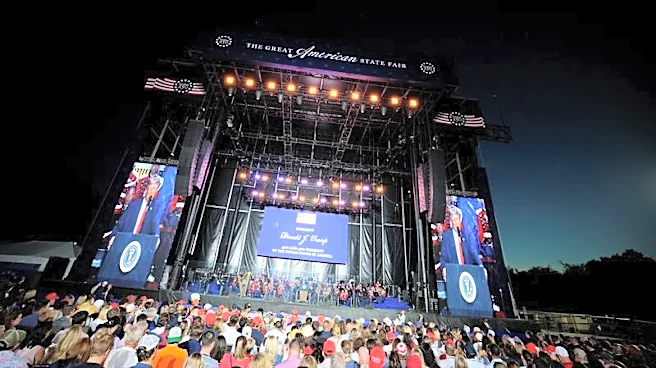
the largest national commemoration in U.S. history, inspiring reflection on the past and commitment to democratic ideals. In theory, it’s a straightforward task of celebrating a shared heritage. However, the commission's work has been complicated by internal disputes and the creation of a rival, Trump-aligned group called Freedom 250, which has created confusion and politicized the planning process. This environment makes the official goal of fostering “shared experiences that spark imagination” exceptionally challenging when the very definition of American values is up for debate.
A Word with Two Meanings
At the heart of the challenge is the word 'freedom' itself. In today's hyper-polarized America, the term has been fractured into two competing concepts. For liberals, freedom is often defined as positive liberty, or the “freedom to” achieve one’s potential. This requires government action to remove systemic barriers related to race, gender, or economics. In this view, freedom means having access to healthcare, education, and protection from discrimination. For many conservatives, freedom is negative liberty: the “freedom from” external constraints, especially government interference. This perspective prioritizes individual responsibility, limited government, and free markets as the essential components of a free society. These are not just different policy preferences; they are fundamentally different philosophies about the purpose of government and the nature of liberty itself.
The Scriptwriter's Trap
For anyone tasked with writing the official script for America 250, this ideological divide creates an impossible trap. How do you tell a story about American freedom that resonates with everyone? If the narrative emphasizes 'freedom from'—celebrating deregulation, individual enterprise, and minimal government—it risks alienating the half of the country that sees this as a recipe for inequality and injustice. It would be seen as endorsing a partisan, conservative vision of America. Conversely, if the script highlights 'freedom to'—focusing on social progress, civil rights struggles, and the role of government in expanding opportunity—it will be immediately attacked by the other half as 'woke' propaganda that ignores traditional values and individual liberty. Any attempt to define freedom will be seen not as a celebration, but as a political statement that picks a side in the culture war.
The Peril of Playing It Safe
The most likely path for America250 is to avoid the issue entirely. Faced with the choice of being controversial or being bland, organizers will almost certainly choose the latter. We can expect scripts filled with soaring but empty platitudes, corporate-sponsored concerts, and celebrations of uncontroversial figures. The narrative will likely focus on generic themes like resilience, innovation, and community service—all worthy topics, but ones that deliberately sidestep the core ideological conflicts that define modern America. The risk here is not controversy, but irrelevance. By trying to offend no one, the 250th anniversary celebration could end up saying nothing meaningful at all. It would become a commemoration that remembers the date of the nation’s birth but forgets the very ideas that have made its history so dynamic, contentious, and vital.