




An Unthinkable Primetime Gamble
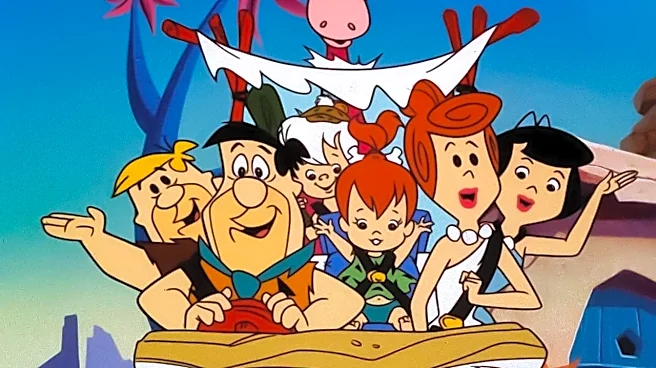
In 1960, animation was for kids on Saturday mornings or for short, lavishly expensive segments before a feature film. The idea of a half-hour animated sitcom for adults in primetime was laughable. Yet, after eight grueling weeks of pitching, Hanna-Barbera
partners William Hanna and Joseph Barbera convinced ABC to take a chance on their Stone Age spin on "The Honeymooners." The bet paid off, and "The Flintstones" became a ratings smash. But this success created an unprecedented demand: a new, fully animated half-hour episode was needed every single week. For a medium where a few minutes of animation could take months and thousands of drawings, this was less a schedule and more a declaration of war against the laws of physics and economics.
The Brutal Production Machine
The core of the crisis was simple arithmetic. A typical theatrical cartoon from the golden age required around 25,000 individual drawings for a seven-minute short. A 22-minute episode of "The Flintstones" would, by that math, require a bank-breaking number of cels and an army of animators. The solution was a revolutionary, if controversial, process known as limited animation. Hanna and Barbera had been developing this technique since leaving MGM, but "The Flintstones" pushed it to its extreme. Instead of redrawing entire characters, animators would reuse bodies, creating movement by animating only a mouth or an arm on a separate cel layer. Backgrounds were looped, and scenes were heavy on dialogue to minimize the need for complex action. This factory-like efficiency allowed them to produce episodes at a fraction of the cost and time, reducing the drawing count for a cartoon to as low as 1,200.
The Voices of Bedrock Under Pressure
The production crunch wasn't just a challenge for the artists; it put immense pressure on the voice cast. The show relied on its dialogue and characters to carry the simplified animation, making the performances of Alan Reed (Fred), Jean Vander Pyl (Wilma), Mel Blanc (Barney), and Bea Benaderet (Betty) essential. These were some of the most in-demand voice actors in Hollywood, juggling multiple roles. The most dramatic example of this dedication came in 1961 when Mel Blanc, the voice of Barney Rubble and countless other characters, suffered a near-fatal car accident that left him in a coma. Incredibly, the production couldn't stop. For a period, temporary voice actors filled in. Later, in a move that has become Hollywood legend, recording equipment was brought into Blanc’s home and even his hospital room, where he performed Barney’s lines while in a full-body cast. His co-star Alan Reed, who had previously been cool toward Blanc, was so moved by his colleague's resilience that it marked a turning point in their friendship.
Innovation Born from Necessity
While critics sometimes derided the show's simplistic visual style, the constraints of the production schedule forced innovations that shaped television for decades. The emphasis on witty dialogue and relatable domestic situations proved that animation could be a medium for sophisticated, adult-oriented comedy. Hanna-Barbera essentially created the blueprint for primetime animation, paving the way for everything from "The Simpsons" to the adult-friendly cartoons of today. The frantic pace meant scripts had to be sharp, characterizations had to be instantly recognizable, and the humor had to land without the aid of fluid, expressive animation. The "crisis" of making "The Flintstones" forced a new kind of storytelling where the writing did the heavy lifting, a model that countless shows would follow.