







Ancient Circles of Status
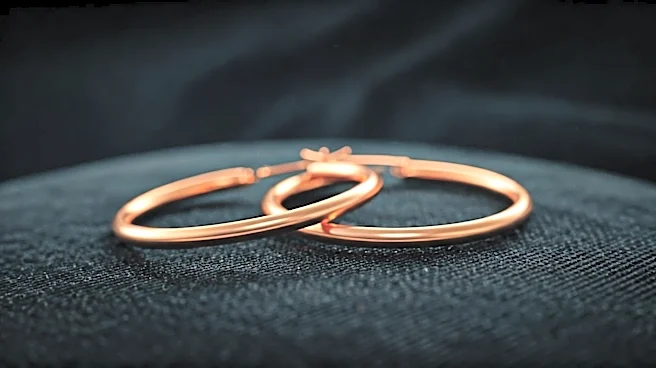
The story of hoop earrings begins thousands of years ago, long before they became a modern fashion staple. In ancient civilizations like Nubia, in what is now Sudan, and Egypt, hoop earrings were powerful symbols of wealth, status, and royalty. Crafted
from gold, which was believed to be the flesh of the gods, these circular adornments were worn by both men and women, including pharaohs like Cleopatra and Tutankhamen. The circle itself was a potent symbol, representing eternity, wholeness, and the cyclical nature of life. This ancient heritage, particularly its strong roots in African civilizations like Nubia and Egypt, forms the foundational layer of the hoop's deep cultural significance.
From Relic to Resistance
In the United States, the hoop earring's journey took a political turn during the Black Power movement of the 1960s and '70s. As Black Americans sought to reclaim their heritage and reject Eurocentric beauty standards, Afrocentric styles became a form of protest and pride. The hoop earring was adopted by activists and cultural icons like Angela Davis and Nina Simone as a visible link to their African roots. Wearing large, bold hoops was an act of defiance—a refusal to be small or silent in a society that often tried to render them invisible. The accessory was no longer just an ornament; it was a symbol of empowerment, resistance, and the bold declaration that Black is beautiful.
The Hip-Hop Era's Signature
If the '70s gave hoops a political edge, the '80s and '90s gave them a permanent home in the heart of popular culture. Through the rise of hip-hop and R&B, gold hoops became an essential element of Black style, particularly for Black and Latina women. Artists like Salt-N-Pepa, with their iconic large hoops and door-knockers, and Sade, with her signature slicked-back hair and elegant gold circles, solidified the earring as a symbol of confident, urban femininity. When LL Cool J famously rapped about wanting a girl with "bamboo earrings, at least two pair," he wasn't just describing a preference; he was validating a cultural aesthetic and making women who wore them feel seen and celebrated.
Reclamation in the Face of Stigma
Despite their popularity, hoop earrings have often been unfairly stigmatized. For decades, the same styles celebrated within Black and Brown communities were labeled "ghetto," "unprofessional," or "trashy" by mainstream white culture. This double standard, where an accessory is policed on a Black woman but praised as a high-fashion "trend" on a white model, highlights a long history of cultural appropriation. For many Black women, continuing to wear hoops—and wear them proudly—is a powerful act of reclamation. It's a way of asserting their identity and refusing to let their culture be devalued, dismissed, or co-opted without credit.
ESSENCE Fest: A Celebration of Self
This entire, rich history culminates in the vibrant atmosphere of the ESSENCE Festival. Here, in a space created by and for Black women, the gold hoop is not a trend, but a tradition. It is a shared symbol that connects generations, a rite of passage, and an emblem of sisterhood. From delicate, thin circles to large, statement-making bamboo styles, each pair tells a story. At ESSENCE Fest, the gold hoop is worn without apology or the need for outside validation. It is a visual representation of power, pride, and the unapologetic joy of being a Black woman, surrounded by a community that understands and celebrates every facet of her identity.