



Beyond the Behemoths
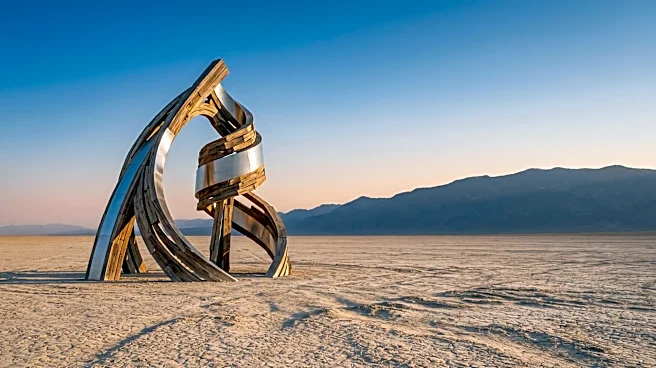
For decades, Burning Man’s artistic identity has been defined by its sheer scale. Colossal moving sculptures like a 72-foot shark or a fire-breathing dragon roam the open playa, while multi-story art pieces become temporary landmarks in a city that vanishes
in a week. These works are spectacular, designed to evoke awe and create communal moments of wonder among the tens of thousands of attendees. They are the icons of Black Rock City, the images that fill social media feeds and define the event for the outside world. Yet, within this metropolis of magnificence, a quieter, more personal movement is taking root. As some long-time Burners critique the growing focus on large-scale art as a pipeline for mainstream recognition, others are answering with a different philosophy. They are creating art that asks you to lean in, not look up.
The Art of the Miniature
This micro-trend is built on the power of discovery and the unexpected intimacy of small-scale encounters. A 2023 guide for aspiring artists specifically empowered creators to build “that thing — no matter how small — that’s tickling your imagination,” noting that there is magic in the “small and whimsical works of art we stumble upon.” These aren't just scaled-down versions of their giant cousins; they are high-concept experiences designed for an audience of one or two. Imagine stumbling upon a lone telephone booth in the deep playa that connects you to another random payphone somewhere in the real world. Or finding a “Bar That Never Opened,” a conceptual piece listed in the 2026 art directory. Other examples from recent years include a custom perfume workshop in a tiny tent called the Olfactorium, a single-person art gallery, or a confessional where shameful stories are traded for Danish pastries. These installations are often characterized by their creative use of materials and a focus on vision over technical precision, creating an approachable and often humorous counterpoint to the engineering marvels elsewhere.
A Push for Personal Connection
So why the shift toward the small? Many see it as a direct reaction to the “spectator” culture that can develop around massive art. While Burning Man’s ethos is rooted in radical participation, the sheer size of some installations can create a natural distance between the art and the participant. A 50-foot-tall sculpture is something to be observed, photographed, and climbed, but it can be difficult to have a personal moment with it. The micro-experiences, by contrast, demand immediate and personal interaction. You can't passively observe a one-person dance club; you must become the entire party. You don't just look at a series of witty signs posted on a trash fence; you read them sequentially, becoming part of a joke told over a quarter-mile. This fosters a different kind of connection—one that is less about the shared spectacle and more about an individual’s unique, unrepeatable moment in the vastness of the desert.
The Future Is Small
This trend isn’t about replacing the giant art that makes Burning Man iconic. The towering Man, the elaborate Temple, and the mutant vehicles are the event's heart and soul. Instead, the rise of micro-art represents a deepening of the event’s creative ecosystem. It reinforces the idea that art at Burning Man isn't just a commodity to be consumed but an experience to be lived. It provides an alternative pathway for artists who may not have the resources for a multi-ton sculpture but possess a powerful, intimate idea. One official project for 2026, "Rinky Dink City," is a collective celebration specifically for small-scale art, aiming to empower new artists by asking, "what if art was fun?" As Burning Man continues to evolve, these tiny, hidden gems ensure that the spirit of surprise, personal connection, and radical self-expression continues to thrive in even the smallest corners of its sprawling, temporary world.