







What Exactly Is a Tactical Foul?
A tactical foul, sometimes called a professional foul, is a deliberate but calculated decision to break the rules. It's not a moment of madness or a violent outburst. Instead, it’s a cold, in-the-moment business decision made to prevent a promising attack
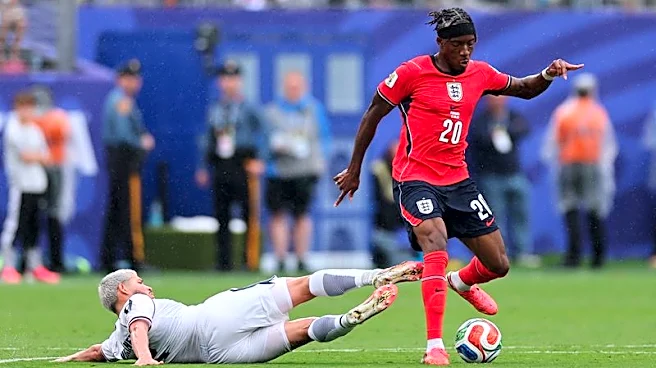
from developing. Think of a slight tug on a shirt, a trip far from goal, or blocking a player's run. These actions are designed to stop play, disrupt momentum, and give the defense a crucial few seconds to get organized, especially against a fast counter-attack. Unlike a reckless, dangerous tackle, the goal isn't to injure the opponent, but simply to halt their progress for a greater strategic benefit.
The Cold, Hard Logic of 'Taking a Yellow'
To a new fan, intentionally committing a foul seems counterintuitive. Why invite a punishment? The answer lies in risk assessment. A manager or player weighs the near-certainty of a yellow card against the potential disaster of conceding a goal. By committing a foul in midfield, a team trades a yellow card and a harmless free kick for the opportunity to reset its entire defensive shape. It prevents a situation where a star forward is running at a lone, outnumbered defender. It's the soccer equivalent of an intentional foul in basketball to stop a fast break; you accept the minor penalty to avoid the major one. Attack-minded teams that send many players forward are often more vulnerable on the break and, therefore, more likely to employ tactical fouls as a form of insurance.
The High-Stakes Gamble
While it's a common tactic, it's not without significant risk. The most obvious downside is the yellow card itself. A player who receives two yellow cards in a match is sent off with a red card, leaving their team a man down. Furthermore, an accumulation of yellow cards over a tournament can lead to a suspension in a crucial future match. There’s also the risk of the foul being misjudged. If the referee deems the foul denied an obvious goal-scoring opportunity (often called DOGSO), it can result in a straight red card, regardless of where it happened on the field. And if that cynical trip occurs inside the penalty area, the result is a penalty kick, which is successfully converted around 80% of the time at the professional level. A smart tactic can quickly turn into a catastrophic error.
A 'Dark Art' or Smart Soccer?
This is the central debate. Is it cynical gamesmanship that ruins the spirit of the game, or is it just savvy game management? Many fans and purists hate it, seeing it as a negative tactic that rewards rule-breaking. Yet for coaches and players, it's an accepted, if unloved, part of the modern game. The most famous recent example is Giorgio Chiellini's grab on Bukayo Saka in the dying moments of the Euro 2020 final. With Saka breaking away, the veteran Italian defender cynically yanked him to the ground by his collar. Chiellini received a yellow card, Italy reset, and they ultimately won the championship on penalties. Chiellini himself later admitted it was a mistake on his part that he had to react to, calling the foul the "right thing to do" in that moment to be effective. It was ugly, controversial, and decisive—the perfect embodiment of the tactical foul.