





What Exactly Is a Bottle Episode?
You know it when you see it. The main characters are stuck in one room—a waiting room, a basement, a single apartment—for almost the entire runtime. That, in essence, is a bottle episode. The term comes from the idea of a “ship in a bottle,” a whole world
contained in a tiny space. Historically, these episodes were born from pure necessity. When a show’s budget was stretched thin, producers would commission a script that used existing sets, a limited cast, and minimal special effects to save money for a more lavish episode later in the season. For decades, they were the unsung workhorses of network television, a clever production trick to keep the train on the tracks. But what began as a budgetary hack has evolved into something far more prestigious.
From Budget Saver to Creative Showcase
The modern bottle episode is less about saving cash and more about cashing in on creative opportunity. Writers and directors now deliberately use the format as a pressure cooker for character development. By stripping away flashy locations, car chases, and complex subplots, the episode forces a laser focus on two things: dialogue and performance. There's nowhere for a character (or an actor) to hide. The result is often an installment that feels more like a stage play, where simmering tensions finally boil over and relationships are tested in real time. Take an episode like 'Fly' from Breaking Bad, which confines its two leads to their meth lab for a full hour, hunting a single insect. The episode, famously divisive at the time, became a deep-dive into the characters' guilt and crumbling psyches, doing more for their arcs than a dozen action sequences could have.
The Anatomy of an Emmy-Maker
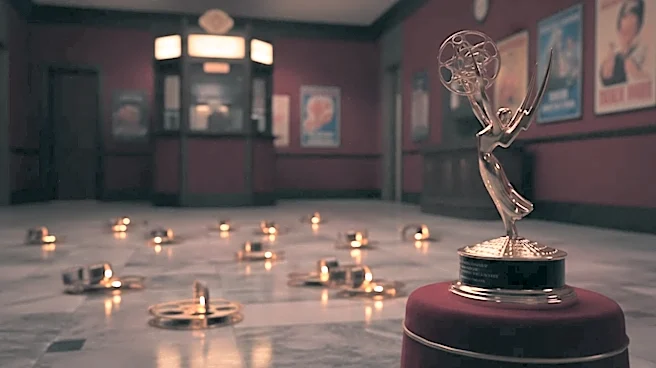
So how does this translate to Emmy gold? The answer lies in the voting process itself. To be considered for an acting nomination, performers submit a single episode that best showcases their work from the season. And what makes a better showcase than an episode where you have nowhere to hide? Bottle episodes are a gift to actors. They are filled with monologues, raw emotional conflict, and sustained, intense scenes—the exact material that makes for a killer Emmy submission reel. An episode like Friends' 'The One Where No One's Ready' is pure character-based chaos in a single apartment, while Community's 'Cooperative Polygraphy' puts the entire cast through an interrogation that reveals secrets and fractures friendships. More recently, shows like Atlanta with its chilling 'Teddy Perkins' episode or The Bear with its stunningly stressful 'Fishes' have used the one-location, high-pressure concept to create some of the most talked-about television of the year, generating massive awards buzz.
Why Voters Can't Resist Them
For Emmy voters, who have to sift through hundreds of hours of television, a bottle episode is a godsend. It’s memorable, self-contained, and offers a clear, digestible sample of a show’s quality and an actor's talent. It isolates the core elements of the craft—writing and acting—from the noise of blockbuster production values. When a voter sees a performance as powerful as Sterling K. Brown's in the Brooklyn Nine-Nine bottle episode 'The Box,' which earned him an Emmy nomination, they aren't just seeing a good performance; they're seeing indisputable proof of an actor’s command of their craft. In a tight race, a strategically chosen bottle episode can cut through the clutter and remind voters of the raw talent at the heart of a series. It transforms a television show from a sprawling narrative into a perfect, potent sample of excellence.