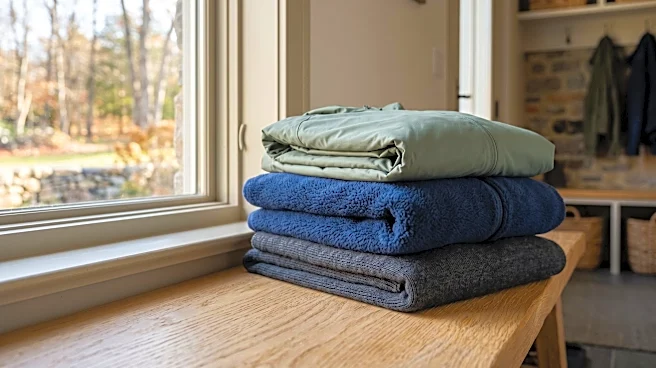








The Real Secret to Warmth: Trapped Air
The common assumption is that the thickness of a garment is what provides warmth. While partially true, the real insulator isn't the fabric itself—it's air. Multiple thin layers create pockets of still air between them. Since air is a poor conductor of heat,
these trapped-air zones act as a powerful barrier, preventing the warmth your body generates from escaping into the cold environment. A single thick jacket, no matter how hefty, only has one layer of fabric and thus traps less air than a multi-layer system. This layering strategy creates a personal microclimate that you can control.
Layer 1: The Base Layer Manages Moisture
The layer closest to your skin has one critical job: moisture management. When you're active, you sweat, even in the cold. If that sweat stays on your skin, it will make you feel chilled or even dangerously cold the moment you stop moving. This is why you should avoid cotton for a base layer at all costs. Cotton absorbs moisture and loses all its insulating properties when wet, actively pulling heat from your body. Instead, choose materials like merino wool or synthetics such as polyester. These fabrics are 'hydrophobic,' meaning they pull moisture away from your skin and push it toward the outer layers to evaporate, keeping you dry and warm.
Layer 2: The Mid-Layer Is Your Insulation
This is your primary warmth layer. The job of the mid-layer is to provide insulation by trapping the body heat that the base layer has helped preserve. This is where materials with 'loft'—the ability to trap air—shine. Classic mid-layers include fleece, down-filled vests or jackets, and heavier wool sweaters. Fleece is a great all-around choice because it’s breathable, insulates well, and dries quickly. Down offers the most warmth for its weight but loses its insulating power when it gets wet. Synthetic insulated jackets mimic the properties of down but continue to provide warmth even when damp, making them a reliable option for unpredictable weather.
Layer 3: The Outer Shell Protects from the Elements
The outermost layer, or shell, is your shield against wind, rain, and snow. Its main purpose isn't to provide warmth, but to protect the insulating mid-layer from the elements that can rob you of heat. Wind can cut through fleece and other insulating materials, while rain can render down useless. A good shell layer stops this. Shells range from simple windbreakers to fully waterproof and breathable jackets. A 'waterproof/breathing' shell is ideal for many activities, as it blocks precipitation from getting in but allows the moisture wicked by your base layer to escape.
The Ultimate Advantage: Adaptability
Beyond superior insulation, the biggest benefit of the three-layer system is its incredible versatility. Unlike a single heavy coat which only has two settings—on or off—layering allows you to fine-tune your comfort level as conditions and your activity level change. Starting a hike on a cold morning? Wear all three. As you warm up on an incline, you can shed your mid-layer. If the wind picks up on a ridge, you can put your shell back on. This ability to add or subtract layers ensures you never get too hot and sweaty, or too cold and clammy, keeping you comfortable all day long.