





Masters of Isolation
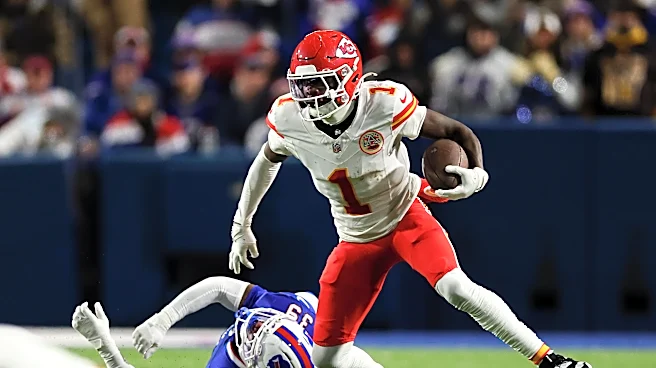
At its core, the job of both a winger and a wide receiver is to win a one-on-one duel in space. In football, an offense will often use formations to get its star receiver, like Justin Jefferson, isolated against a single cornerback on the outside. The entire play is designed to hinge on that single matchup. The same principle governs elite soccer. A team will work the ball to create a situation where their winger, like Brazil's Vinícius Júnior, is running directly at a lone fullback. In both sports, the goal is to leverage an individual talent advantage. By stretching the field horizontally, both positions force the defense to make a difficult choice: commit extra help and leave another area exposed, or trust your defender to survive on an island
against a player built for attack.
The Unseen Art of the Route
A great wide receiver isn't just fast; they are a master of deception. Their “route tree”—a catalog of slants, posts, fades, and comebacks—is a language of movement designed to create a yard of separation. The same is true for a winger, though their 'routes' are more fluid. A winger running a 'go route' is simply sprinting in a straight line past the last defender to latch onto a long pass. When a winger like Liverpool's Mohamed Salah cuts inside from the right onto his stronger left foot, it's the soccer equivalent of a receiver running a sharp slant or post route, breaking toward the most dangerous area of the field. A winger who runs to the end line before crossing the ball is executing a 'fade' to the corner. This off-ball movement, the intelligent running into space before the ball even arrives, is the hidden craft that separates the good from the great in both positions.
Speed Kills, Agility Decides
The physical profile is strikingly similar. Both wingers and wide receivers are typically among the fastest players on the field. Think of Tyreek Hill’s game-breaking speed in the NFL and Kylian Mbappé’s terrifying pace in soccer; they warp the geometry of the game, forcing defenses to play deeper and with more caution. But straight-line speed is only part of the equation. The truly elite players in both roles possess world-class acceleration and deceleration. Their value comes from the ability to stop on a dime and change direction, leaving a flat-footed defender in their wake. This burst of agility, whether it’s a receiver creating separation at the top of his route or a winger executing a quick step-over to beat his man, is the tool they use to turn a 50/50-ball into a high-percentage opportunity.
Delivering the Final Product
Ultimately, both positions are judged on production. They are the designated playmakers tasked with creating the decisive moment in the attacking third of the field. For a wide receiver, the 'final product' is a catch—securing the ball to move the chains or, ideally, score a touchdown. They are the intended target of the quarterback's throw. A winger’s role is functionally identical. They are often the target of a midfielder’s pass, and their job is to turn that possession into a tangible threat. The final product might be a pinpoint cross for a teammate to head into the goal (an assist), a shot that finds the back of the net (a goal), or a tricky run that draws a foul in the penalty box. In either sport, these are the players expected to make something happen when the game is on the line.
Where the Analogy Bends
Of course, the comparison isn’t perfect. The biggest difference is the continuous nature of soccer. A wide receiver’s job is performed in short, explosive bursts, followed by a huddle and a rest. A winger, while still an attacker, must also contribute defensively for 90 minutes, tracking back to help their own fullback. They are more involved in the patient, possession-based buildup of play, sometimes acting as simple outlets to maintain possession rather than attacking every single time they touch the ball. While a receiver’s role is almost exclusively about attacking a defense, a winger’s is a more balanced, high-endurance blend of offense and defensive responsibility. Still, the fundamental spirit of the position remains the same: get the ball on the edge and go make a play.