






The Main Event: A Blockbuster Movie
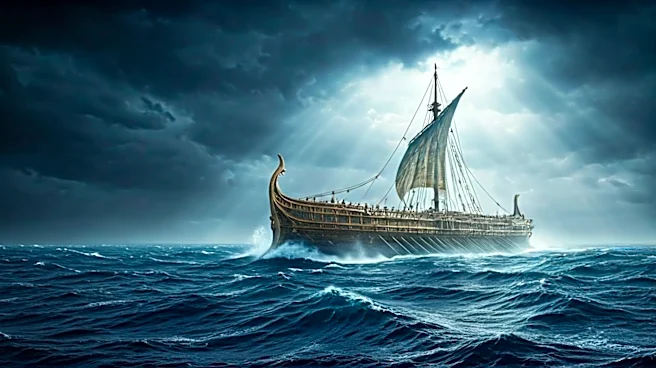
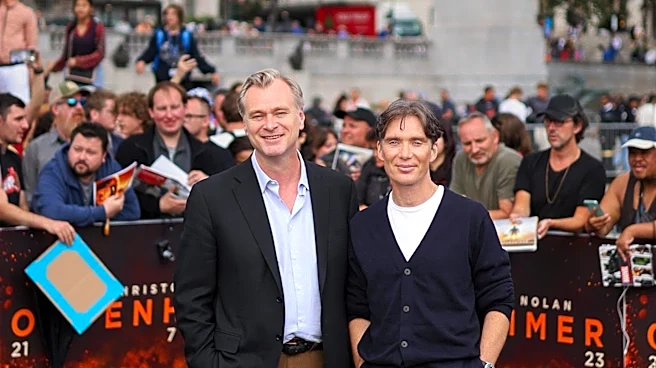
The single biggest driver of the conversation is the upcoming release of Christopher Nolan’s epic film, “The Odyssey,” scheduled to hit theaters on July 17, 2026. After the colossal success of “Oppenheimer,” Nolan has turned his attention to Homer’s foundational
saga, assembling an all-star cast that has Hollywood buzzing. Matt Damon stars as the cunning hero Odysseus, with Anne Hathaway as his ever-faithful wife Penelope and Tom Holland as their son, Telemachus. The star-studded ensemble also includes Charlize Theron, Robert Pattinson, and Zendaya. With a budget of $250 million and the distinction of being the first film shot entirely with IMAX cameras, Universal Pictures is positioning the film not just as a movie, but as a massive cinematic event. The release of a new trailer has only intensified the hype, showcasing Nolan's vision of a realistic, gritty interpretation of Greek mythology. This high-profile adaptation has single-handedly thrust the ancient story back into the mainstream spotlight, making it a hot topic of conversation from film blogs to social media.
The Game-Changing Translation
Long before Nolan’s movie was announced, the groundwork for the Odyssey's revival was laid by classicist Emily Wilson. In 2017, she became the first woman to publish a complete English translation of the epic, and her work was hailed as a cultural landmark. Wilson’s translation was celebrated for its crisp, modern, and direct language, which stripped away the often dense and archaic prose of earlier versions. She famously translated the opening line’s description of Odysseus not as “resourceful” or “man of twists and turns,” but simply as a “complicated man.” This choice unlocked a more nuanced, psychologically complex hero for modern readers. Wilson’s work made the 12,000-line poem feel less like a stuffy homework assignment and more like a fast-paced, accessible adventure story, exposing the poem's moral ambiguities and giving fuller weight to its female characters. Her translation became a bestseller and a critical darling, re-introducing the epic to a new generation.
The Bestselling Spinoffs
Hollywood isn't the only industry capitalizing on the power of Greek myths. The literary world has seen a massive surge in popularity for feminist retellings of ancient stories, and no author has been more successful than Madeline Miller. Her novels, "The Song of Achilles" and especially "Circe," have been runaway bestsellers, fueled in part by their immense popularity on the #BookTok corner of TikTok. Miller’s "Circe" takes a character who is a brief, if memorable, stop on Odysseus’s journey and transforms her into the protagonist of her own epic, exploring her story from a powerful, female perspective. These novels don't just rehash the old myths; they deepen them, giving voice and agency to characters who were often marginalized in the original texts. This trend has proven that there is a huge audience for stories that engage with the classics in a new way, priming readers to be more interested in the original source material.
The Original Action Hero
Ultimately, the reason "The Odyssey" works as a modern blockbuster is because it was built like one from the start. The story is a high-stakes adventure filled with monsters, gods, magic, and suspense. Odysseus himself is a prototype of the modern action hero: he is a brilliant strategist, a flawed leader, and a grizzled survivor who just wants to get home to his family. He's not a simple, virtuous hero; he's cunning, sometimes dishonest, and morally ambiguous—in other words, complicated. The epic’s structure, which starts in the middle of the action and uses flashbacks to fill in the backstory, feels surprisingly cinematic and novelistic to a modern audience. It’s a timeless tale of resilience against impossible odds, a journey that still resonates with our own struggles, temptations, and the universal desire to find our way home.