



Soccer's Moment of VAR-cical Failure
It was the kind of mistake that seemed impossible in the modern era. In a marquee English Premier League match, Liverpool’s Luis Díaz scored a perfectly good goal against Tottenham. The on-field official disallowed it for offside, a tight but incorrect
call. This is precisely why the Video Assistant Referee (VAR) exists: to correct clear and obvious errors. But in the booth, a catastrophic communication breakdown led the VAR official to mistakenly believe the on-field decision was 'goal.' He quickly said 'check complete,' confirming the bad call on the field instead of overturning it. The game moved on, the wrong score stood, and Liverpool ultimately lost. The fallout was immense: released audio of the referees’ panic, official apologies, and a global firestorm over a system designed to eliminate such blunders. For the world of soccer, it felt like a crisis point for technology in sport.
Welcome to the Club, Says the NBA
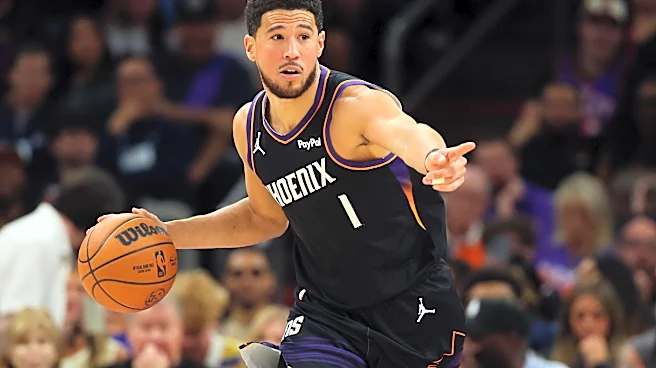
Across the Atlantic, NBA fans could only nod knowingly. This exact brand of techno-fueled sports existentialism is old hat. Basketball has been wrestling with the ghost in the machine for decades. The NBA’s journey with instant replay began as a tool for objective truths: was the shot off in time? Was his foot on the three-point line? But its mission has crept ever forward, seeking a level of forensic accuracy that has had profound, and often frustrating, consequences. The league’s public-facing 'Last Two Minute Reports,' which retroactively grade every call in close games, create a constant stream of 'what ifs' that satisfy no one. The Coach’s Challenge, introduced in 2019, further empowers the search for perfection, but at the cost of game flow and rhythm, turning the fluid final moments of a contest into a stuttering, stop-start legal proceeding. The quest to get every call right has, ironically, only amplified the conversation around officiating mistakes.
The Unintended Consequences of Perfection
This is the core of the parallel experience. Both sports introduced replay to increase fairness, but they are now dealing with the same set of unintended consequences. In soccer, the biggest complaint about VAR, besides its occasional spectacular failure, is how it has altered the very act of celebration. A goal is no longer a moment of pure, unadulterated joy; it’s a provisional event, pending approval from a remote official. Players and fans hold their breath, waiting for confirmation, robbing the game of its most explosive emotional release. In the NBA, the cost is tempo. A thrilling, back-and-forth final minute can be derailed by multiple replay reviews, killing momentum and testing the patience of everyone in the arena. In both cases, the pursuit of a flawless, machine-officiated game has come at the expense of the human experience that made fans fall in love with the sport in the first place.
The Human Element vs. The Machine
Ultimately, the debate in both sports boils down to a single philosophical question: what do we want our games to be? Do we want the impossible standard of perfect, error-free officiating, even if it means sterile celebrations and choppy game flow? Or do we accept a degree of 'human error' as an intrinsic, if sometimes maddening, part of the competition? The NBA’s experience suggests there is no easy answer. Despite years of tinkering with replay rules, the controversies haven't vanished; they've just changed form. Officials are now criticized not just for bad calls, but for how replay is (or isn't) used. Soccer, newer to this particular technological entanglement, is now learning the same hard lesson. The technology isn’t a magic wand that creates a utopian world of perfect officiating. It’s just a new, more complicated tool that creates new, more complicated arguments.