







When Paris Went Dark
For decades, American fashion took its cues from Paris. Designers and department store buyers would travel to France, see the latest haute couture, and create more affordable versions for the U.S. market. But in 1940, with the Nazi occupation of Paris,
that lifeline was severed. Suddenly, American designers were on their own. This isolation was compounded by wartime restrictions at home. The War Production Board issued regulations, like Limitation Order L-85, to conserve materials for the war effort, reducing fabric use in clothing by 15%. These rules forbade things like wide hems, cuffs, and elaborate trimmings. Faced with a creative vacuum and material scarcity, American designers didn't just cope; they innovated, forging a new fashion identity rooted in practicality, accessibility, and the realities of American life.
The Architect of the 'American Look'
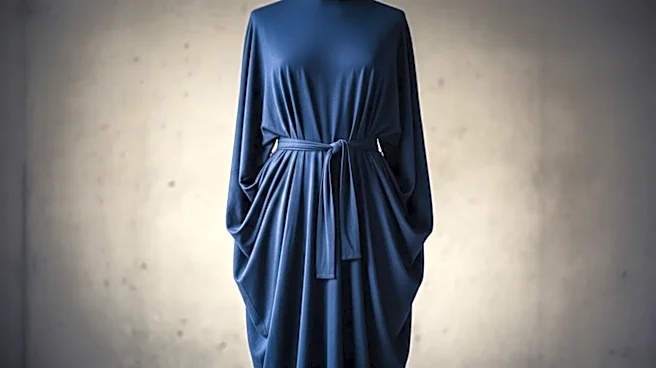
No designer defined this new direction more than Claire McCardell. Often called the inventor of the “American Look,” McCardell rejected the rigid, formal structures of French couture and instead designed for the active, modern woman. She championed the idea of “separates,” offering women a wardrobe of coordinated pieces they could mix and match, a concept that forms the basis of most modern closets. Her iconic designs prioritized movement and ease, like the revolutionary “Monastic Dress,” a loose, unstructured frock that the wearer could belt to create a shape, and the wildly popular “Popover Dress,” a stylish wrap design intended as a chic solution for everything from housework to a cocktail party. She used humble, functional fabrics like denim, wool jersey, and cotton, and even popularized ballet flats as everyday footwear when leather was in short supply. It was a philosophy of democratic, sensible style.
Designing for a New Woman
McCardell was the leading voice, but she wasn't alone. A generation of designers embraced this new philosophy. Bonnie Cashin, another pioneer of sportswear, focused on creating layered, functional, and timeless pieces for a woman on the go. Inspired by her love of travel, she introduced durable materials like leather into everyday fashion and created iconic, unfussy designs like the poncho and tunic. Her use of industrial hardware, like metal toggle closures, became a signature that elevated practical details into stylish elements. Meanwhile, Norman Norell was proving that American ready-to-wear could rival the quality of Parisian couture. He became famous for his impeccably tailored day dresses and stunning sequined “mermaid” gowns—using unrationed paillettes to add glamour during a time of austerity. Together, these designers built a fashion ecosystem that responded to the changing roles of women, who needed versatile clothing for work, home, and leisure.
The DNA in Your Closet Today
The principles established by these 1940s pioneers didn't fade away after the war; they became the foundation of modern fashion. The concept of separates evolved into Donna Karan's famous “Seven Easy Pieces” in the 1980s and lives on in the capsule wardrobes so popular today. The focus on comfort, movement, and performance fabrics laid the groundwork for the global athleisure phenomenon. Every time you pull on a pair of jeans with a sweater, choose a wrap dress for its effortless style, or rely on a favorite jacket with functional pockets, you are living the legacy of American sportswear. It was a quiet shift, born of necessity, that ultimately defined a national style—one that valued the life you live in the clothes, not just the fantasy of the clothes themselves.