


1. Full-Canvas Construction
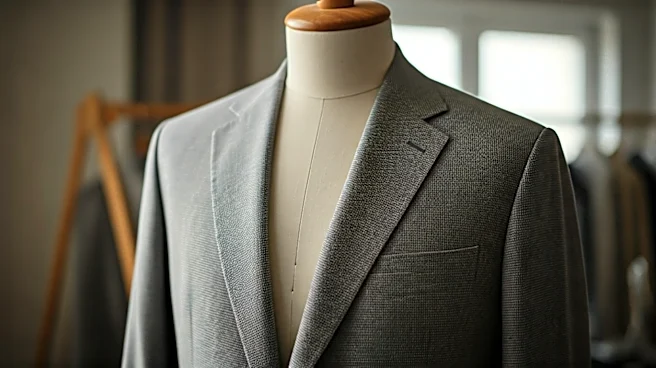
Let’s start with the soul of the jacket. Most off-the-rack suits are ‘fused,’ meaning the outer fabric is glued to a synthetic interlining. It’s cheap, fast, and gives the jacket a stiff, lifeless feel that worsens over time. A full-canvas jacket, however,
features a layer of canvas (typically horsehair and wool) stitched between the outer fabric and the inner lining. This ‘floating’ canvas isn’t rigid; it moves with you and molds to your body over years of wear, creating a personalized fit. It allows the jacket to drape naturally, giving it a three-dimensional shape that fused jackets can only imitate poorly. Paying for a canvassed jacket isn't just an upgrade; it’s an investment in a garment that will look better, feel more comfortable, and last exponentially longer.
2. Spalla Camicia (or 'Shirt Shoulder')
This Neapolitan tailoring signature is a masterclass in understated elegance and comfort. A traditional suit shoulder is structured and padded, creating a sharp, formal line. The spalla camicia, or ‘shirt shoulder,’ does the opposite. The tailor attaches the sleeve with a slight pucker or ‘grin,’ inserting a larger sleeve head into a smaller armhole without using padding. The result is an un-structured, incredibly soft shoulder that follows the natural curve of your body. It offers a superior range of motion—you can hail a cab or reach for a book without feeling the jacket fight back. It’s a subtle signal of bespoke quality and a focus on wearer comfort over rigid formality, a hallmark of the effortlessly stylish men at Pitti.
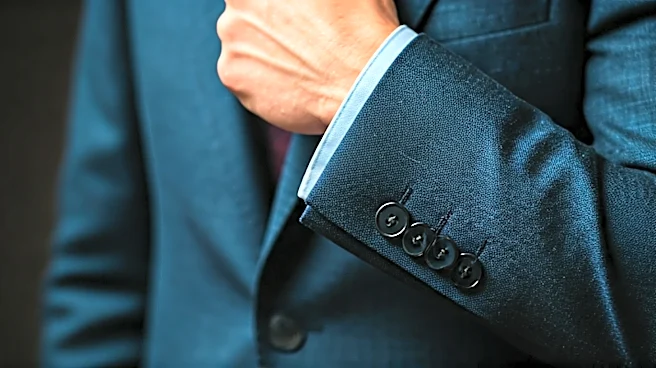
3. Surgeon’s Cuffs (Functional Sleeve Buttons)
On most suits, the buttons on the sleeve cuffs are purely decorative, sewn onto a closed vent. Historically, however, these buttons were functional, allowing a doctor (or surgeon) to roll up his sleeves without removing his jacket. Today, ‘surgeon’s cuffs’ are a calling card of a high-quality or custom-made suit. Creating functional buttonholes on a sleeve is a complex and costly process that manufacturers of mass-market suits simply skip. Having them signals that the jacket was made with a higher level of care. It’s a detail that allows for a bit of personal flair—leaving the last button undone is a classic sartorial wink, a quiet nod to those who know what they’re looking at.
4. The Milanese Buttonhole
Forget everything you know about machine-stitched buttonholes. The Milanese buttonhole, typically found on the lapel of a high-end jacket, is a work of art. Instead of stitching through the fabric, a silk thread is wrapped meticulously around a gimp (a thicker guide thread) to create a raised, glossy, and incredibly durable buttonhole. It’s a purely manual process that can take a skilled artisan over an hour to complete. The result is a small, sculptural detail that gleams in the light and stands proud on the lapel. It serves no functional purpose that a standard buttonhole couldn't, but its presence is an unambiguous declaration of handwork and quality. It’s the tailoring equivalent of a Swiss watch movement: beautiful, precise, and utterly dedicated to craft for its own sake.
5. Hand-Stitched Pick Stitching
Look closely at the lapels, pocket flaps, and vents of a fine jacket. If you see tiny, discreet stitches running along the edge, you’re likely looking at pick stitching. While machines can replicate this, true hand-done pick stitching has a subtle irregularity and charm that a machine can’t match. These stitches aren’t just decorative; they help keep the edges of the fabric crisp and prevent them from curling over time. It’s a laborious detail that requires a steady hand and a great deal of time. More than its functional benefit, it’s visible proof of the human touch in the garment’s construction. This dedication to craft is precisely what the Pitti Uomo regulars celebrate—the idea that clothing can be more than just a covering, but a form of functional art.