






The Birth of a Bohemian Icon
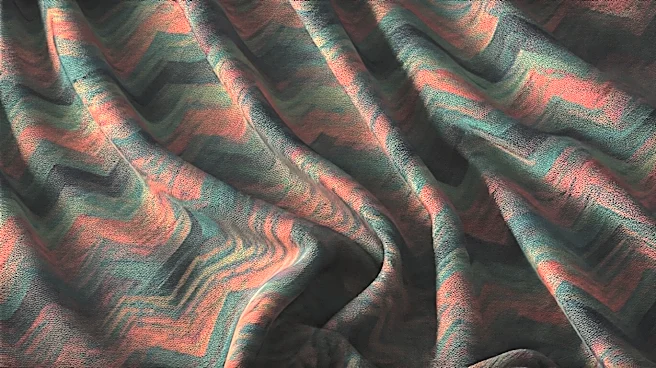
The story of the zigzag begins not as a design sketch, but as a technical innovation. In the 1950s, Ottavio and Rosita Missoni founded their knitwear workshop in Gallarate, Italy. Ottavio, a former track athlete, and Rosita, from a family of shawl makers, were a perfect blend of discipline and artistry. Their breakthrough came when they acquired raschel knitting machines, which were typically used for making shawls and lace. Instead of following convention, the Missonis began experimenting. They pushed the machines to their limits, manipulating the warp-knitting technique to create lightweight, intricate patterns that were previously impossible in knitwear. The iconic zigzag, or *fiammato* (flame stitch), was born from this spirit of playful
invention. It wasn’t a pattern printed onto fabric; it was woven into its very structure. This gave their garments a unique depth and fluidity, creating a kaleidoscope of color that moved with the body. They transformed the humble sweater into a canvas for modern art.
The Pattern That Defined an Era
By the late 1960s and early 1970s, the Missoni zigzag had become more than a pattern—it was a cultural signifier. As the jet set took to the skies, flitting between St. Tropez, Ibiza, and Mustique, Missoni’s designs became their unofficial uniform. The clothing perfectly captured the era’s bohemian spirit and rejection of stiff, formal tailoring. A Missoni knit was the antithesis of a constricting suit. It was comfortable, easy to pack, and radiated a confident, artistic sensibility. Legendary fashion editor Diana Vreeland was an early champion, and soon, stylish women everywhere coveted the look. Owning a piece of Missoni meant telegraphing a life of culture, travel, and sophisticated leisure. The zigzag wasn’t just a print; it was a passport to a more colorful, liberated way of dressing and living.
Why the Zigzag Endures
Trends are fleeting, but the Missoni zigzag has achieved design permanence. Its staying power lies in its brilliant balance of complexity and simplicity. The pattern is visually dynamic, creating a sense of movement and energy that is inherently flattering. The sharp angles are graphic and modern, yet the myriad color combinations give it a soft, almost painterly quality. Furthermore, the zigzag evokes a feeling. It’s inherently joyful and optimistic, a visual burst of energy that feels perfect for sunshine and vacation. It cleverly straddles the line between being bold and being timeless. While other patterns can quickly feel dated—think of certain 80s geometrics or 90s florals—the abstract nature of the zigzag allows it to be reinterpreted endlessly without losing its core identity. It’s a design that feels both artisanal and highly sophisticated, a rare combination that ensures its perpetual relevance.
The Modern Resort Echo
Today, when you browse the resort or cruise collections of nearly any major fashion house, you’ll see Missoni’s legacy. It’s there in the explosion of multicolored chevron knits, space-dyed sweaters, and graphically patterned dresses that have become staples of vacation dressing. While Missoni still owns its signature look, the aesthetic it pioneered has become a foundational element of the entire resort wear category. Designers have adopted the core principles: lightweight, intricate knits that are easy to wear, full of color, and evoke a sense of global travel. The zigzag itself—and its many chevron and flame-stitch descendants—has become a shared visual language for signaling luxury, leisure, and effortless style. The presence of a vibrant, graphic knit in a collection is an immediate signifier that these are clothes for escaping, for relaxing, for living beautifully. This is the ultimate tribute to Missoni's genius: they didn’t just create a pattern; they defined the very look and feel of the modern getaway.