







The British Beginning: Terrace Culture
To understand the soccer jersey’s journey, you have to go back to 1980s Britain. The trend didn’t start with fashionistas; it started with die-hard fans in the stadium stands, or “terraces.” A subculture known as “casuals” emerged, focused on one-upping
rival fan groups not through violence, but through style. They adopted high-end European sportswear brands like Fila, Sergio Tacchini, and adidas, creating a distinct, brand-conscious look. While team kits were part of the uniform, the emphasis was on looking sharp and representing your tribe. This was the first time a team’s colors were explicitly linked to a subcultural fashion movement outside the immediate context of playing the sport. It planted a seed: the soccer jersey as a badge of identity and belonging.
The 90s Crossover: Britpop and Rave
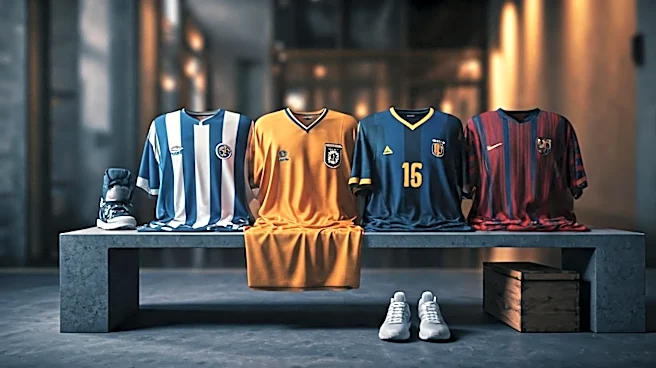
The 1990s blew the trend wide open. Soccer jersey design entered its most audacious era, with wild geometric patterns, oversized logos, and vibrant, almost psychedelic colorways. Think of the iconic German 1990 World Cup kit or Manchester United’s sharp-collared Umbro shirts. Simultaneously, British music scenes embraced the look. Britpop bands like Oasis and Blur were photographed in team gear, tying the jersey to a cool, swaggering rock-and-roll attitude. In the burgeoning rave scene, the baggy, breathable, and brightly colored polyester shirts were a perfect fit for all-night dancing. For the first time, you didn't have to be a die-hard fan to wear one; you just had to be part of the youth culture.
The Global Co-Sign: Hip-Hop and Celebrity
For the soccer jersey to conquer America, it needed a different kind of cosign. While David Beckham had made soccer style aspirational in the early 2000s, it was the hip-hop world that turned the jersey into a true streetwear grail. Artists have long used sportswear to signal authenticity and allegiance, and as soccer’s global profile rose, its jerseys became a new canvas. The turning point for many was Drake’s constant championing of different clubs, from Juventus to Manchester United. But the watershed moment was the 2018 World Cup. The Nigeria home kit, a dizzying, beautiful design by Nike, sold out in minutes and was worn by everyone, everywhere. It wasn’t just a jersey; it was a cultural event, proving that a soccer shirt could be the hottest fashion item on the planet.
Today's Game: Blokecore and High Fashion
Now, the trend has a name: “Blokecore.” Popularized on TikTok, the aesthetic is simple: a retro or classic soccer jersey, a pair of jeans or track pants, and some cool sneakers (often adidas Sambas or Gazelles). It’s an effortless, nostalgia-fueled look that celebrates authenticity over hype. At the same time, high fashion has fully embraced the pitch. Brands like Balenciaga have released their own soccer-inspired apparel, while collaborations between streetwear giants and clubs—like Palace and Juventus or Patta and Inter Milan—are now commonplace. These partnerships legitimize the jersey as a designer item, blurring the lines between sportswear and luxury. The jersey is no longer just a trend; it's a permanent fixture in the modern wardrobe, valued for its design history, cultural weight, and undeniable cool.