









First, Let's Get Cut and Shape Straight
Before diving into investment strategy, it's crucial to understand a distinction many buyers confuse: cut is not the same as shape. 'Shape' refers to the diamond's outline—whether it’s a round, pear, oval, or emerald. 'Cut,' on the other hand, refers to the quality
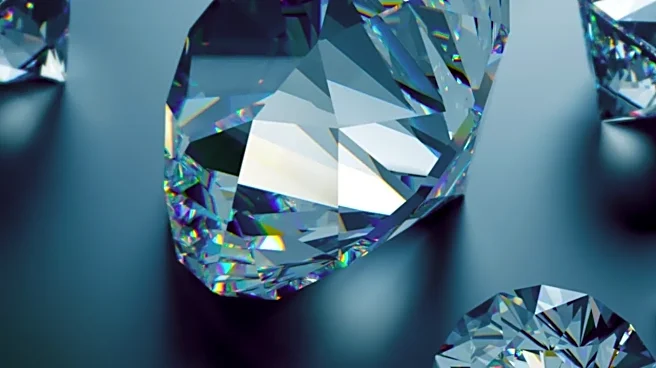
of its proportions, symmetry, and polish. It’s about the craftsmanship that dictates how a diamond interacts with light. An expert gemcutter can take the same rough stone and create a diamond that looks either dazzlingly brilliant or disappointingly dull. This human-controlled factor is arguably the most important of the 4Cs (Cut, Color, Clarity, Carat) when it comes to securing value.
The Round Brilliant: King of Liquidity
For the purest investment perspective, one shape stands above all others: the round brilliant. Due to its exceptional ability to reflect light and its timeless, symmetrical beauty, the round brilliant has long dominated global demand. This popularity creates a highly liquid market. Just like a blue-chip stock, a high-quality round brilliant diamond is easier to price, sell, and trade than its counterparts. The pricing is more standardized, and there’s always a deep pool of buyers. While other shapes may fall in and out of fashion, the round brilliant’s appeal is constant, making it the safest harbor for value.
Fancy Shapes: The Allure and the Risk
Any diamond that isn't a round brilliant is termed a 'fancy' shape. This includes the popular oval, cushion, princess, and emerald cuts. These shapes can offer a unique aesthetic and sometimes even appear larger than a round diamond of the same carat weight. However, from an investment standpoint, they carry more risk. Their markets are smaller and more susceptible to trends. An oval cut might be in high demand today but less so in a decade, affecting its resale value. Furthermore, the valuation of fancy shapes is more subjective. While a round diamond’s cut quality is standardized by the Gemological Institute of America (GIA), the grading for fancy shapes is more complex, making their value less predictable.
Why Cut Quality Trumps All
Here’s the most critical takeaway for an investor: regardless of shape, the quality of the cut is paramount. A poorly cut round brilliant is a bad investment. A perfectly cut emerald or oval, while perhaps less liquid, can be a great one. A diamond's ability to sparkle—its brilliance and fire—is a direct result of how well it has been cut. A diamond with an 'Excellent' or 'Ideal' cut grade will always command a higher price and be easier to resell than one with a 'Good' or 'Fair' grade, because its beauty is immediately apparent. A well-cut stone maximizes its light performance, making it more desirable to jewelers and the public alike, directly impacting its financial worth.
The Investor's Bottom Line
When approaching a diamond purchase as a financial decision, the cut is your primary concern. It directly influences the stone's beauty, which in turn drives its market value and desirability. For maximum safety and liquidity, a round brilliant diamond with a GIA grading of 'Excellent' is the undisputed champion. If your portfolio allows for a bit more risk or you have a strong preference for a different look, a fancy shape can still be a solid investment, but only if the cut is of the absolute highest quality. In this market, a dull diamond is not just a cosmetic issue—it’s a financial liability.