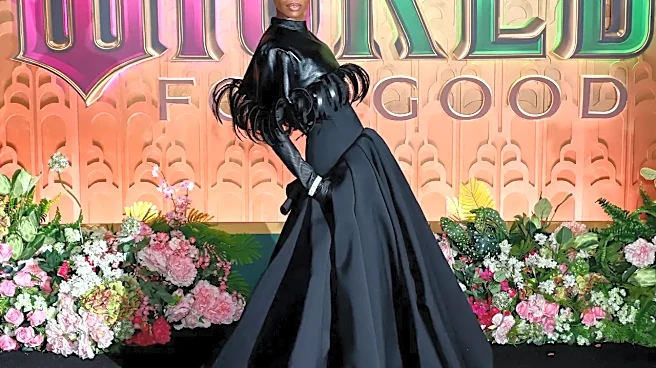



The 'Wicked' film adaptation arrived on a tidal wave of expectation, promising a cinematic trip to Oz like no other. While Part One delivered the dazzling spectacle fans craved, it was Part Two that truly defined the saga's legacy.
More Than a Technicolor Dream
For over two decades,
the stage musical 'Wicked' has been synonymous with spectacle: a soaring Elphaba, a bubble-bound Glinda, and an Emerald City that bursts with vibrant life. Director Jon M. Chu’s 'Wicked: Part One' masterfully translated that theatrical grandeur to the screen. It was a visual feast, full of breathtaking sets and dazzling musical numbers that honored its Broadway roots. But beneath the polished razzle-dazzle, the film was doing something more. It laid the groundwork for a story that was always darker and more politically charged than its sparkling reputation suggested. 'Part One' wasn't just about defying gravity; it was about establishing the choices that would lead to unavoidable, heartbreaking consequences. It set the stage, both literally and figuratively, for a second act that would swap bombast for emotional and political weight.
The Weight of the Wand
If Elphaba’s journey is about radicalization, Glinda’s is about complicity. In 'Wicked: For Good', Ariana Grande’s portrayal of the 'good' witch evolves from a bubbly, popularity-obsessed socialite to a public figure grappling with the moral compromises of power. The second film forces her to confront the fallout of her ambition. She becomes the smiling face of a corrupt regime, spreading propaganda against her former friend while privately wrestling with her conscience. This internal tug-of-war—between her desire for adoration and her lingering loyalty to Elphaba—becomes one of the saga's most compelling conflicts. The consequences for Glinda aren't just about losing a friend; they are about realizing that the power she craved came at the cost of her own integrity and her ability to protect the people and principles she once cared about.
The Politics of Being Wicked
The second film is where Elphaba’s story truly becomes a tragedy. Cynthia Erivo’s powerhouse performance anchors 'For Good' in the painful reality of being a misunderstood outsider. After being branded a villain by the Wizard's propaganda machine, her every action is twisted into something sinister. The film leans into the darker, more somber tones of this arc, exploring how a person with good intentions can be demonized by those in power. Her powerful ballad, 'No Good Deed,' becomes less a moment of strength and more a portrait of utter vulnerability and heartbreak, as Erivo expertly excavates the pain of a woman who has lost everything in her fight for justice. The ultimate consequence for Elphaba is the realization that in a world that demands conformity, her power and principles have made her an enemy of the state, a fate she must surrender to.
A Fable for Our Time
By splitting the story into two parts, Jon M. Chu gave the narrative's darker themes the space they needed to breathe. In interviews, the director noted that the story’s themes of truth, propaganda, and the nature of villainy felt incredibly urgent and relevant to modern society. 'Wicked: For Good' delivers on that promise, transforming the story into a resonant fable about political division, the demonization of 'the other,' and the difficulty of doing good in a corrupt world. While the first film drew audiences in with its visual magic and beloved songs, the second installment ensured the story would linger. It confirmed that the most powerful magic in 'Wicked' wasn't the spells or the spectacle, but its incisive commentary on how history is written by the victors, leaving the so_called 'wicked' to have their stories told by someone else.