










A Continent-Sized Jigsaw Puzzle
On the surface, the 2026 FIFA World Cup schedule looks like a logistical marvel, a carefully plotted map for the biggest tournament in the sport’s history. For the first time, 48 teams will compete across 104 matches in 16 cities spanning three countries.
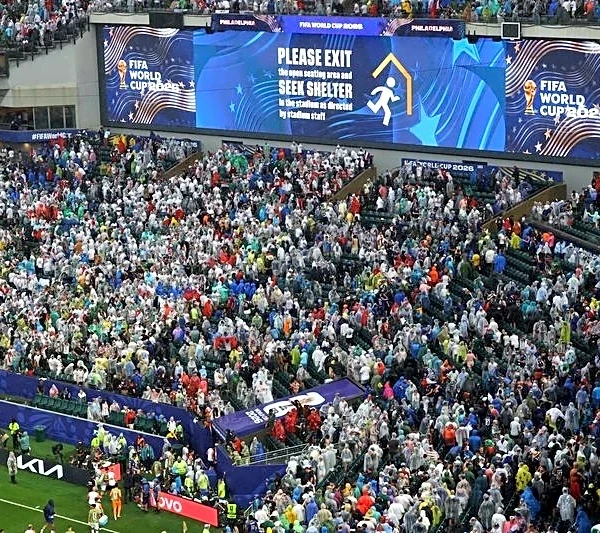
From the historic opener at Mexico City’s Estadio Azteca to the grand finale at MetLife Stadium in New Jersey, the path to glory is laid out. But assembling this schedule was far more complex than just connecting dots on a map. FIFA and the host committees weren't just managing time zones and travel distances; they were grappling with a far more powerful and unpredictable force: the North American climate. The tournament’s traditional June-July window falls squarely during the continent's peak heat, turning a scheduling exercise into a high-stakes game of risk management.
The Invisible Opponent: Extreme Summer Heat
The real story of the 2026 schedule is written in degrees Fahrenheit. Many of the U.S. host cities become virtual ovens in midsummer. Dallas, which will host a record nine matches including a semifinal, regularly sees July temperatures soar past 100°F (38°C). Miami and Houston bake in oppressive humidity that makes the high-80s feel even hotter, creating dangerous conditions for elite athletes. Even cities further north, like Kansas City and Philadelphia, are prone to severe heat waves during the tournament window. This isn't just an inconvenience; it's a serious threat to player safety and performance. Medical experts warn that playing 90 minutes of high-intensity soccer in such conditions dramatically increases the risk of heatstroke and exhaustion. This forced FIFA to treat the weather not as a background detail, but as a central antagonist that had to be outmaneuvered.
FIFA’s Climate-Driven Strategy
Look closely at the schedule, and you’ll see the fingerprints of this climate strategy everywhere. It’s no coincidence that the cities with the most extreme summer weather—Dallas (Arlington), Atlanta, and Houston—all have enclosed, air-conditioned stadiums. These climate-controlled venues became essential anchors, allowing FIFA to guarantee safe playing conditions and schedule marquee matches, like a semifinal, in a location that would otherwise be untenable. For games in open-air stadiums, kick-off times have been pushed to the evening wherever possible to avoid the scorching midday sun. Furthermore, the tournament’s group stage is organized into regional “pods” (East, Central, West) to minimize cross-country travel. This keeps teams in a relatively consistent climate zone for the opening rounds, reducing the physiological strain of moving between, for example, the cool Pacific Northwest and the humid Southeast.
Why the Final Landed in New Jersey
The decision to award the final to the New York/New Jersey bid over Dallas was perhaps the clearest signal of weather’s influence. While Dallas offered a state-of-the-art indoor stadium, FIFA ultimately chose MetLife Stadium, an open-air venue. Why? It's a calculated risk based on climate averages. While a New Jersey July can certainly be hot and humid, it is significantly less likely to feature the kind of extreme, prolonged heat found in North Texas. The average July high in East Rutherford is around 85°F (29°C), a more manageable temperature for a final that will capture global attention. The choice represents a compromise: a bet on more favorable open-air conditions in the Northeast over the guaranteed, but artificial, coolness of an indoor Texas stadium. It shows that for the world’s biggest game, FIFA wanted an authentic stadium atmosphere, and was willing to gamble on a milder climate to get it.