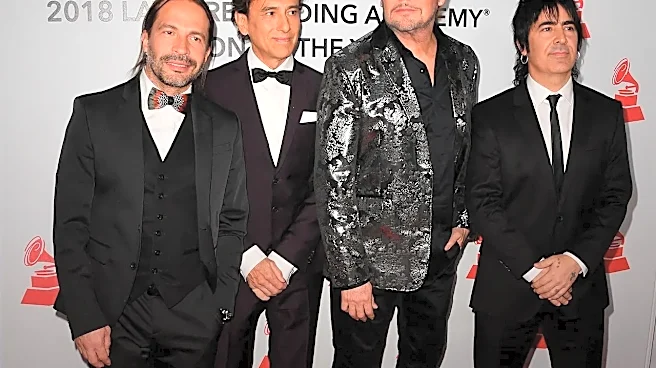

Ever watch the Latin Grammys and wonder how a certain song or album took home the big prize? The winners in the top categories aren't chosen by chance. Here's a look inside the meticulous, multi-layered
process that turns a year of music into a handful of golden gramophones.
It Starts with the Voters
Before any award is handed out, you need the people who decide. The Latin Recording Academy's voting members are creative and technical professionals from the Latin music world. This isn't a fan vote; it's a peer-to-peer honor. To even qualify as a voting member, a person must have a number of verifiable credits on commercially released recordings, such as being an artist, songwriter, producer, or engineer. These are the people who live and breathe music, and their collective judgment forms the foundation of the entire awards process. The membership spans the U.S. and Ibero-America, ensuring a diverse body of experts from across the Latin music landscape.
Submission and Screening
The journey for a potential Latin Grammy-winning track begins when it's submitted for consideration by either an Academy member or a record company. The eligibility period for the 2026 awards, for example, runs from June 1, 2025, to May 31, 2026. For a recording to be considered, at least 60% of its content must be in Spanish or Portuguese. Once submitted, every entry goes through a screening process with more than 100 industry experts. Their job isn't to judge artistic quality, but to ensure each submission is in the correct category—placing a salsa track in the Tropical field or a rock song in the Rock field, for instance. This is a crucial housekeeping step to make sure voters are comparing apples to apples.
The Two Rounds of Voting
The actual selection happens in two distinct phases. First is the nomination round. Voting members receive a ballot and are instructed to vote only in their areas of expertise (up to 15 categories), plus the four General Field categories that everyone can vote on. This is where the massive list of eligible recordings is whittled down to the official nominees. For most categories, there are five nominees, but for the highly coveted General Field, the list is expanded to ten. After the nominees are announced, the final voting round begins. Members receive a new ballot with just the finalists and once again cast their votes for a winner in each category. The results are kept secret and tabulated by the independent accounting firm Deloitte until the big night.
Decoding the General Field
The 'General Field' is the main event, comprising the four most prestigious awards. Voters are asked to consider different criteria for each. Record of the Year is about a specific recording's overall excellence, honoring the artist, producers, and engineers—everyone who contributed to the final track you hear. Album of the Year takes a wider view, assessing the quality, vision, and cohesion of a full album project. Song of the Year is purely a songwriter's award, celebrating the composition itself—the lyrics, melody, and structure, regardless of who performed it. Finally, Best New Artist is awarded to a performer who achieved a breakthrough in the public consciousness during the eligibility period, establishing their public identity. These distinctions are why you might see the same song nominated for both Record and Song of the Year; one rewards the performance and production, the other rewards the writing.