
Wingers vs. Full-Backs: The War for the Flanks
This is the classic one-on-one duel that defines a team's shape. The entire game can stretch or shrink based on this matchup. An attacking team’s winger wants to do one of two things: beat their defending
full-back on the outside to deliver a cross, or cut inside to shoot or link up with a striker. The full-back's job is to prevent both. Watch how this plays out. If a winger consistently gets the better of their opponent, the defending team is in huge trouble. Their center-backs get pulled out of position, and gaps open up everywhere. But if a full-back locks down a star winger, it can completely neutralize a team's primary attacking threat, forcing them to find another way forward. In modern soccer, you'll also see attacking full-backs or wing-backs who bomb forward to create a 2-v-1 overload against the opponent's lone defender on that side. How teams manage this wide-area space is often the first indicator of who has the tactical upper hand.
The Midfield Trio: Who Controls the Engine Room?
Games are won and lost in the middle of the park. Most elite modern teams play with a trio of central midfielders, each with a specific job. Typically, you have a defensive midfielder (the No. 6) who shields the defense, a box-to-box midfielder (the No. 8) who contributes at both ends, and an attacking midfielder (the No. 10) who creates chances. The tactical battle here is about control. Can one team’s trio dominate possession, pass through the opponent's pressure, and dictate the tempo? Or will the other team's midfield press aggressively, break up play, and launch quick counter-attacks? Watch for the triangles they form; these shapes are designed to ensure the player on the ball always has at least two passing options. The team whose midfield can successfully impose its will on the game usually ends up in control of the scoreboard.
The Lone Striker vs. Two Center-Backs: An Island Battle
Playing as a single striker against two hulking center-backs can be the loneliest job in soccer, but it's a critical tactical role. The striker's goal isn't just to score. It's to occupy both defenders, creating space for teammates. They make runs to pull one defender out of position, hold up the ball to let midfielders join the attack, and press the opposition to disrupt their build-up play. The center-backs, in turn, must communicate perfectly. Who marks the striker? Who provides cover? If they both go for the same ball, they can leave a massive gap behind them. If neither commits, the striker has time and space to turn and create danger. This isolated battle is a constant war of intelligence and physicality. A striker who can successfully manipulate two defenders is a massive asset, even if they don't touch the ball often.
Pressing Triggers vs. Building from the Back
In the past, many teams would let defenders have the ball. Not anymore. Modern soccer is defined by high-pressing systems designed to win the ball back in the opponent's half. This creates a fascinating tactical contest. One team will try to patiently pass its way out of defense, using the goalkeeper as an extra outfield player to create a numbers advantage. The other team sets "pressing traps." They'll intentionally leave a certain pass open, and as soon as the ball travels, they swarm the receiving player, hoping to force a turnover in a dangerous area. The matchup is a test of nerve and coordination. Can the team in possession stay calm and find the open player, breaking the press and leaving acres of space to attack? Or will the pressing team's organized chaos succeed, turning defense into an instant goal-scoring opportunity?
Set Pieces: The Great Equalizer
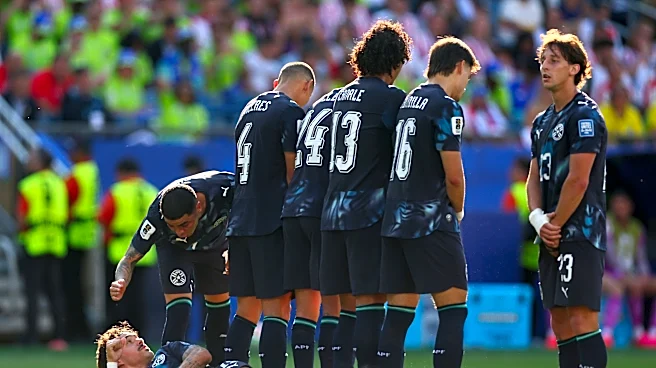
In tight, cagey tournament games where neither team is giving an inch, a set piece—a corner kick or a free kick—can be the deciding factor. It's the one moment where play stops, and everyone can get organized. This matchup is pure preparation. Attacking teams have elaborately designed plays, using screens, blocks, and dummy runs to get their best headers free. Defending teams must decide between man-marking (each player has an assigned opponent) or zonal marking (each player defends a specific area). It’s a tactical battle that often pits a team's biggest players against each other in a small, crowded space. In a low-scoring event like a World Cup, being brilliant on set pieces—or resolute in defending them—can be the difference between advancing and going home early.