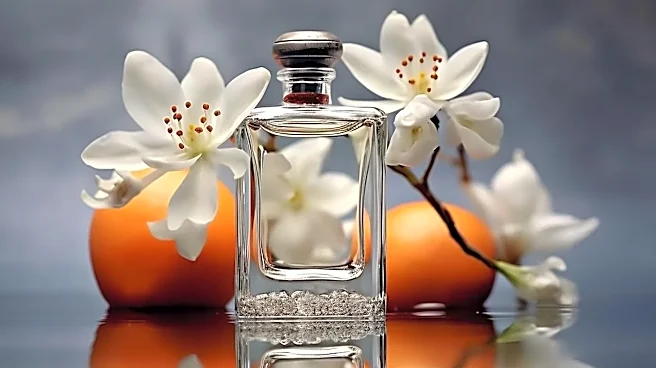

A Story in a Bottle
To understand Mitsouko, you have to go back to 1919. The world was emerging, bruised and changed, from the First World War. In Paris, a master perfumer named Jacques Guerlain was inspired by his friend
Claude Farrère's bestselling novel, La Bataille (The Battle). The novel tells the story of Mitsouko, a beautiful, noble Japanese woman torn between her husband, a Japanese naval officer, and her secret love for a British officer during the Russo-Japanese War. Her name, which can be translated as 'mystery,' captured the essence of the perfume Guerlain wanted to create: something profound, beautiful, and full of dignified emotion. It was not just a perfume; it was a narrative of forbidden love and quiet strength, bottled in an era fascinated by the mystique of the Far East.
The Architecture of a Masterpiece
The true genius of Mitsouko lies in its revolutionary structure. It belongs to the chypre family of fragrances, an elegant style defined by a specific accord: a bright citrus top (usually bergamot), a floral or resinous heart, and a dark, mossy base of oakmoss. The first modern chypre had been created by François Coty in 1917, and it was a sensation. But Jacques Guerlain took that blueprint and perfected it. His masterstroke was adding a very specific note that had never been used in this way before: a velvety, luscious peach. This wasn't a simple, sugary fruit scent. Achieved with a synthetic compound known as aldehyde C-14, this peach note gave Mitsouko a rounded, almost fleshy quality that felt both entirely new and profoundly timeless. This daring combination of the traditional chypre structure with a juicy, innovative fruit note is the technical secret to its endurance.
An Intellectual Fragrance
Mitsouko is often described as an intellectual or even melancholic perfume. It does not shout for attention with the sugary sweetness of modern gourmands or the aggressive freshness of a department store aquatic. Wearing it is a journey. The experience begins with a flash of bright, almost sharp bergamot. This gives way to a complex heart of florals like jasmine and rose, all warmed by the signature peach note and a whisper of spice. But the final act is where Mitsouko reveals its true character. A rich, earthy, and slightly somber base of oakmoss and vetiver emerges, grounding the fruit and florals in a way that feels complex and sophisticated. It’s a scent that develops and changes on the skin throughout the day, rewarding patience and contemplation. It is this depth and complexity that has led fans from Charlie Chaplin to Ingrid Bergman to fall under its spell.
Why It Resists Trends
The fragrance market is driven by novelty. Each year brings a new wave of trends—hyper-sweet candy scents, minimalist “clean skin” musks, salty marine notes—that burn brightly before fading away. Mitsouko outlasts them all because it was never designed to please a fleeting taste. It is a complete, self-assured artistic statement. Its complexity is its strength. While many modern perfumes are designed for an immediate, easy-to-like first impression, Mitsouko asks more of its audience. It doesn't smell like anything else because it established its own category: the reference fruity chypre against which others are judged. It is a monument, and trends are temporary scaffolding built around it. To wear Mitsouko is to wear a piece of history, but one that feels perpetually relevant because its beauty is based not on fads, but on perfect, unshakeable structure.