

The Chop That Shocked the World
Mainstream fashion history often points to Audrey Hepburn in 1953’s “Roman Holiday” as the pixie’s breakout moment. In the film, a princess sheds her long locks—and her royal obligations—for a chic, liberating crop. The haircut was a narrative device
symbolizing newfound freedom, and it resonated deeply with audiences tired of the elaborate, high-maintenance styles of the postwar era. Just a few years later, actress Jean Seberg debuted an even shorter version for Jean-Luc Godard’s “Breathless,” cementing the cut as the epitome of French New Wave cool and modern, liberated womanhood. Then came the 1960s, and with them, supermodel Twiggy and actress Mia Farrow, whose iconic, boyish pixies became synonymous with the youth-driven mod movement. These women weren't just getting haircuts; they were making a statement against traditional femininity, and in doing so, created a cultural earthquake.
A New Problem to Solve
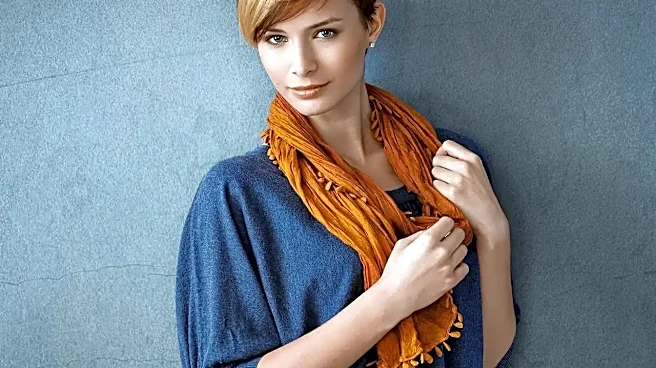
Long hair can hide a multitude of sins. It can be pulled back, braided, or twisted into an updo. Short hair, however, has nowhere to hide. The pixie cut exposed everything: the texture, the shape, the health of the scalp. It couldn't just hang there; it had to be styled. This presented a new challenge for millions of women. The soft, sprayed-stiff hold of traditional hairsprays wasn't enough. A pixie needs definition, separation, and structure without looking like a helmet. It requires piece-y texture to avoid looking flat and the ability to be sculpted and shaped. This wasn't about simply freezing a style in place; it was about giving it life and movement. Women who made the chop quickly discovered they needed a new arsenal of products, but in the 50s and 60s, the market for women's styling products was surprisingly limited.
The Product Revolution Begins
The demand created by the pixie cut quietly forced the hair care industry to innovate. Styling products that were once the exclusive domain of men’s barbering began to cross over. Pomades, historically made from animal fats or petroleum jelly to create slick, sculpted men's styles like the ducktail, were suddenly relevant for women. But the old-school greasy formulas weren't quite right. This need spurred the development of lighter, more versatile styling products. Hair wax, with its softer consistency, allowed for the pieced-out texture the pixie demanded. The 1990s, another huge decade for the pixie thanks to stars like Winona Ryder and Halle Berry, saw the rise of more sophisticated pastes, putties, and texturizing creams designed to give flexible hold and a matte finish. These weren't your grandpa's pomades; they were specifically formulated for creating modern, structured styles on short hair.
The Modern Pixie's Lasting Legacy
Today, the products born from the needs of the pixie cut are staples for all hair lengths. That texturizing spray you use to get beachy waves? Its DNA can be traced back to the need for definition in a short crop. The matte-finish clay pomade that gives your lob a bit of grit? A direct descendant of the products created to stop a pixie from looking too fluffy. The industry’s focus shifted from mere hold to the nuanced concept of “texture.” This has benefited everyone. Modern formulations, like water-based pomades that rinse out easily and lightweight pastes, offer control without the heavy buildup of their predecessors. The pixie forced product developers to think about hair not as something to be tamed, but as a fabric to be shaped and sculpted. It pushed the market beyond simple shampoos and conditioners into the highly specialized world of stylers we know today. That bold chop from the 1950s didn't just change faces—it completely reshaped the bottles and jars that fill our cabinets.