


The Context: A New Guard
To understand the feather, you have to understand the early '90s. Fashion was emerging from the bold, brash, and often bombastic glamour of the 1980s. Big shoulders, bright colors, and logo-mania reigned supreme. But a new mood was brewing, one centered
on something more thoughtful, intellectual, and raw. Leading this charge was a group of Belgian designers known as the Antwerp Six, which included Dries Van Noten, Walter Van Beirendonck, and, of course, Ann Demeulemeester. They crashed the London and Paris fashion scenes with a radically different point of view. Their work wasn't about status; it was about emotion. It was dark, deconstructed, and deeply personal. Demeulemeester, in particular, became the high priestess of this new aesthetic, championing a romantic androgyny that felt like a quiet but firm rejection of everything that had come before.
The Philosophy: Poetic Deconstruction
Demeulemeester's world was built on a foundation of black and white, light and shadow. Her clothes weren't just garments; they were expressions of a feeling. She was a master of tailoring but used her skills to undo and reframe classic shapes—a jacket with sleeves intentionally too long, a shirt that draped asymmetrically, trousers that pooled at the ankle. This wasn't about being trendy; it was about creating a uniform for a tribe of artists, poets, and dreamers. Her clothes were worn by people like Patti Smith, her long-time muse, who embodied the soulful, rock-and-roll spirit of the brand. For Demeulemeester, beauty was found in imperfection, strength in vulnerability, and power in quiet confidence. She wasn't designing for an occasion; she was designing for a life.
The Moment: An Accidental Icon
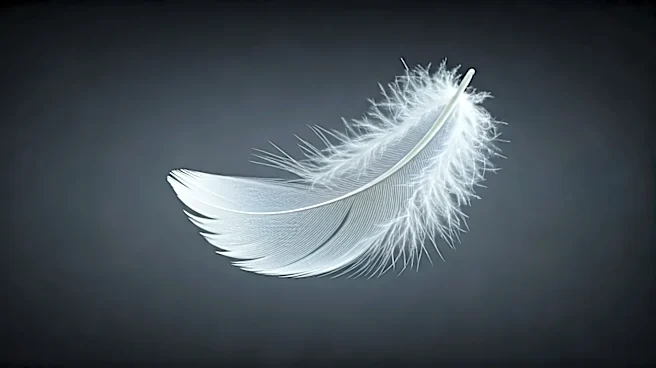
The legendary look appeared in her Spring/Summer 1992 show in Paris. Amidst the carefully constructed monochrome pieces, model Kristen McMenamy walked the runway. Her face was bare, her expression serene. In her hand, she held a single white feather. That was it. But here’s the story: this iconic gesture almost didn't happen. The feather wasn't a painstakingly sourced accessory or a calculated design element. According to fashion lore, Demeulemeester’s son, Viktor, had found it. Struck by its simple, natural beauty, the designer decided at the last minute to incorporate it into the show. It was so fragile, so un-designed, that it could have easily been dismissed. It wasn't a "look" in the traditional sense. There was no intricate styling, no complex instruction. The direction to McMenamy was simply to hold it. This spontaneity is why it almost wasn't on the runway—it was a whisper, not a shout, a found object in a world of manufactured luxury.
The Power of a Simple Gesture
In that one moment, the feather crystallized everything Ann Demeulemeester stood for. It was a powerful symbol of fragility and strength, a piece of nature held against the backdrop of an industrial fashion show. It showed that the most impactful statement could also be the quietest. In an industry obsessed with more—more sparkle, more fabric, more branding—she offered less. The image became legendary precisely because of its purity. It wasn't selling a product; it was communicating an idea. It invited the viewer to find beauty in the small, overlooked details. For a generation weary of '80s excess, this felt like a revelation. The feather became a shorthand for her entire brand: poetic, soulful, and profoundly human.