
An Unlikely Musical Obsession
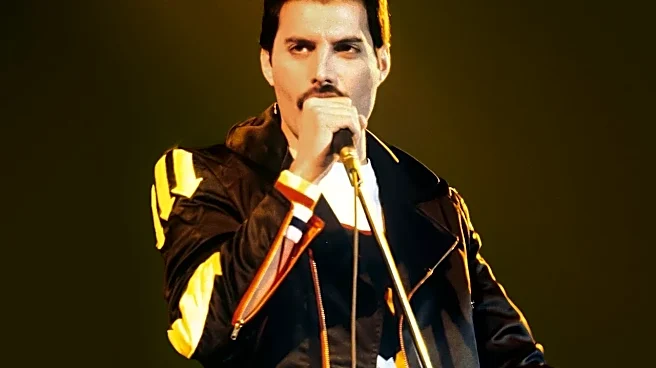
Freddie Mercury, the flamboyant showman of Queen, harbored a deep and enduring love for opera. While Queen famously infused their rock anthems with operatic drama in songs like "Bohemian Rhapsody," Mercury's
personal ambition went further. He was particularly captivated by the Spanish soprano Montserrat Caballé, whose voice he once called "the best in the world." In 1986, after publicly expressing his admiration for her on Spanish television, a meeting was arranged. Mercury, the king of rock, was about to propose a collaboration with the queen of opera—a project that existed at the intersection of genius and commercial suicide.
A Collision of Two Worlds
The initial idea was to record a single song together, but the creative chemistry between Mercury and Caballé was so immediate that the project expanded into a full album. The album, titled "Barcelona," was not a simple rock-sings-opera novelty. Mercury and his co-writer Mike Moran composed entirely new music designed to merge the two genres. The process was unconventional; due to their conflicting schedules, Mercury would record demos, singing Caballé's soprano parts in his own remarkable falsetto, and send the tapes to her to learn. For Caballé, a diva accustomed to the rigid structure of classical tradition, this spontaneous, rock-and-roll method of creation was a departure, but one she embraced with enthusiasm.
The Studio's Cold Feet
While the artists were inspired, the music industry was skeptical. In the late 1980s, the line between high art and popular music was firmly drawn. Classical purists often dismissed rock as commercial noise, while rock critics and labels were unsure what to do with an album devoid of driving guitar riffs and standard pop structures. Polydor Records, the label releasing the album, was reportedly hesitant. It was a high-risk commercial venture, a genre-bending experiment that fit into no existing radio format or marketing plan. Critics were polarized, with many in the classical world viewing it as an insult to the art form, while rock journalists found it simply confusing. The project challenged every convention of the time, making it a difficult sell.
Vindication and an Olympic Legacy
The album "Barcelona" was released in October 1988. While not a blockbuster on the scale of a Queen record, it performed respectably, with the title track reaching number eight on the UK singles chart in its initial 1987 release. Its true moment of vindication, however, came posthumously. The song "Barcelona" had been written with the hope of it becoming the theme for the 1992 Summer Olympics, held in Caballé's home city. Though Mercury tragically passed away in 1991 and could not perform it at the opening ceremony as planned, the song was used as a central musical theme for the games' broadcast coverage. This global exposure sent the song rocketing up the charts again, cementing its place in cultural history and proving the initial doubters wrong.