




The Unscripted Second Stage
For devoted fans and first-timers alike, the main draw of Universal's Halloween Horror Nights has always been the meticulous artistry of fear: the detailed haunted houses, the roaming hordes of scare-actors, and the pervasive sense of dread. You go to watch
the monsters. But in recent years, a second, unscripted show has emerged, one that’s often just as compelling and occasionally more terrifying. It’s the crowd itself. The dynamic has shifted from a passive audience watching a performance to an active, chaotic variable in the experience. The psychology of controlled fear relies on a contract between the creators and the guest: we pretend to put you in danger, and you pretend to be scared, all within a safe framework. But when the crowd becomes its own unpredictable force, that contract gets complicated. Your focus is no longer just on the ghoul lunging from the shadows, but on the conga line of people shuffling through the maze, the sea of phones capturing every moment, and the collective, often contradictory, behavior of thousands of people trying to have the same scary experience at once.
The Performance of Being Scared
A significant catalyst for this shift is the omnipresence of the smartphone. The event is no longer just something to experience, but something to document. Walk through any scare zone and you’ll see it: dozens of illuminated screens held aloft, turning guests from participants into amateur cinematographers. This creates a strange new dynamic where part of the crowd is performing for their own audience. People aren’t just getting scared; they’re curating the image of themselves getting scared. This can sometimes dilute the carefully orchestrated tension. A scare-actor’s perfect timing might be ruined by a flash, or a tense hallway’s silence broken by someone narrating for their livestream. It transforms portions of the park into live film sets where the monsters are the unwilling co-stars, and the real directors are the people in the queue. The horror becomes a backdrop for content creation, fundamentally altering the shared experience for those who are there simply to be immersed.
Horror in the Conga Line
Beyond the digital realm, the sheer physical presence of the crowd has become a central feature. Most nights of the event are, by any measure, very crowded. Universal has even taken steps to mitigate this, such as offering premium, lower-capacity nights and adjusting multi-night pass options, indirectly acknowledging that crowd density is a major factor in guest experience. This has led to the infamous "conga line" phenomenon inside haunted houses, where guests are pulsed through in a near-constant stream. The intended effect—isolation and suspense—is often replaced by a slow, shuffling march where the next scare is spoiled by the reaction of the ten people in front of you. Navigating the park's streets becomes less about dodging monsters and more about weaving through a dense, slow-moving mass of people. This introduces a different kind of anxiety, one rooted in claustrophobia and frustration rather than supernatural terror. Your mission shifts from surviving zombies to simply getting to the next bathroom.
A New Kind of Communal Fear
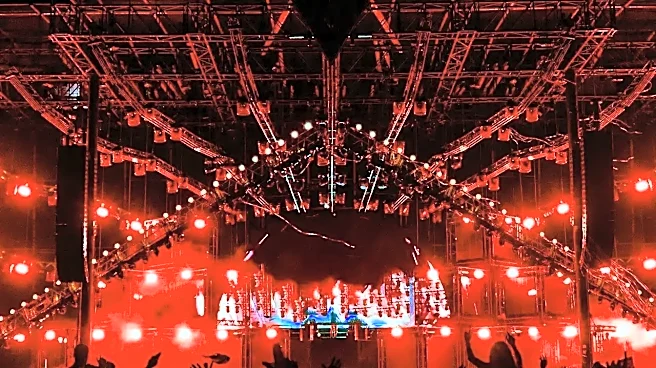
Yet, to dismiss this evolution as purely negative would be to miss a crucial point. There is a unique, powerful energy that comes from being part of a massive crowd united in fear. The shared scream when a monster appears, the collective gasp, the laughter that follows—these create a sense of community. Watching the crowd is also a masterclass in human psychology. You see every reaction on the spectrum: pure terror, performative bravery, annoyed indifference, and genuine delight. This new dynamic transforms Halloween Horror Nights from a passive horror movie into an interactive, communal festival of fear. It may not be the isolated, cinematic horror it once aimed for, but it has become something else: a living, breathing organism of shared adrenaline. The unpredictability of the crowd is, in its own way, a new layer of immersion. The monsters are a known quantity; the person next to you is not.