


More Than Just a Little Black Dress
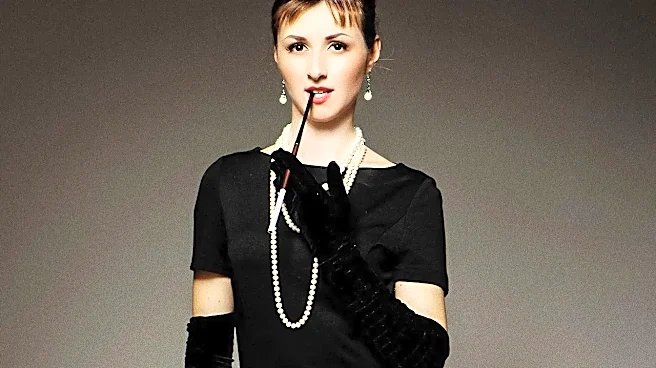
Let’s get the big one out of the way: the black dress. It’s the star of the show, a masterpiece of Italian satin designed by Hubert de Givenchy, who was Audrey Hepburn’s designer of choice and close personal friend. Their collaboration defined her on-screen
and off-screen persona, and his designs for the film—including a pink cocktail dress and a striking orange wool coat—are legendary. But here’s the twist: Givenchy didn't dress the entire film. The credit for “costume supervision” went to Edith Head, the legendary, eight-time Oscar-winning doyenne of Hollywood costume design. Givenchy designed Miss Hepburn’s most glamorous looks, but Head and the Paramount wardrobe department handled the rest, including Holly’s more casual, everyday outfits. Even the famous opening-scene dress wasn’t purely Givenchy; its leg-baring slit was deemed too risqué by the studio, so Head redesigned the lower half of the dress for the final film.
The Art of the High-Low Mix
This is where the hidden influence begins to surface. Holly Golightly is a woman of contradictions. She’s a country girl turned sophisticated New York socialite, navigating a glamorous world on a precarious budget. Her wardrobe perfectly reflects this. It wasn’t all Parisian couture. The film showcases Holly in simpler, more accessible outfits, like the casual sweater and jeans she wears while singing “Moon River” on her fire escape. These “pedestrian clothes,” as they were called, were provided by Edith Head’s team. Holly repeats outfits throughout the film, changing their vibe with different accessories—a hat here, a statement necklace there. She wears one of her black dresses to a party, then again on a date, styled completely differently. This isn’t the behavior of someone with an endless supply of haute couture. It’s the signature move of a modern, style-conscious woman curating her look from a limited but high-quality wardrobe—the very essence of vintage shopping.
A Blueprint for Personal Style
In 1961, “vintage shopping” as we know it didn’t exist. Second-hand stores were for the needy, not the fashionable. Yet, Holly Golightly’s entire persona is built on the art of the curated find and the power of self-styling. Her apartment is famously sparse, but the few things she owns are chosen with care. Her fashion follows the same logic. Her minimalist color palette of black, beige, and grey allows her to mix and match pieces endlessly, making a small collection of clothes feel expansive. She’s not just wearing clothes; she’s building an identity. The clothing is a costume for the sophisticated, independent woman she desperately wants to be, a stark contrast to her chaotic inner life. This idea of using fashion to invent and project a persona is the bedrock of today's style culture, where vintage and thrifted pieces are prized for their uniqueness and storytelling potential.
The Enduring Golightly Ethos
While Holly Golightly may not have been scouring thrift shops for her Givenchy, her character provides the philosophical blueprint for why we do. She embodied a new kind of feminine ideal: not the overt bombshell glamour of Marilyn Monroe, but a chic, independent, and slightly mysterious elegance. She proved that style wasn’t about having a closet full of expensive things, but about having the right things and knowing how to wear them. Her approach—investing in quality staples, repeating outfits creatively, and using accessories to transform a look—is the playbook for every savvy shopper who blends second-hand treasures with modern pieces. The hidden influence of Breakfast at Tiffany's isn't a vintage store featured in the film. It's the film’s demonstration that true style comes from curation, personality, and the creative vision to make a few beautiful things entirely your own.