



The Spectacle as the Headliner
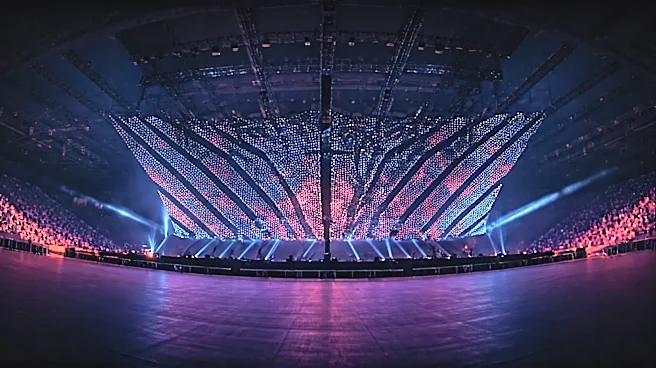
Let’s be clear: the jaw-dropping spectacle of Electric Daisy Carnival is a core part of its appeal. Stages like circuitGROUNDS and cosmicMEADOW aren't just platforms for DJs; they are gargantuan, fire-breathing, laser-spewing monsters of production design.
They are characters in the story. Insomniac Events, the festival’s organizer, has mastered the art of sensory overload. For hundreds of thousands of attendees, the feeling of being dwarfed by a screen the size of a city block while fireworks explode overhead is the peak experience they paid for. In a competitive U.S. festival market, this relentless one-upmanship is a key differentiator. If another festival has a big stage, EDC needs a bigger one. This drive creates unforgettable moments and viral marketing gold, cementing the festival’s reputation as the ultimate audiovisual theme park for adults.
The Loss of Human Connection
Herein lies the hidden cost. When a stage is built to accommodate a crowd the size of a small city, the artist becomes an abstraction. From the back half of the crowd, the DJ is a barely visible speck, their movements rendered on screen. The performance loses its human element, becoming more of a pre-programmed light show synced to a familiar playlist. The connection between artist and audience, a foundational element of live music, frays. It also impacts the connection between attendees. In a smaller, more intimate setting, you feel part of a collective, sharing a moment with those around you. In a sprawling field of 50,000 people facing a single stage, you’re often just an individual navigating a dense sea of strangers, your experience defined more by your proximity to a speaker tower than by a shared energy.
When ‘Big Room’ Sound Is the Only Option
Mega-stages also dictate a certain type of music. To sonically fill a massive open-air space and move a gigantic crowd, the music must be, for lack of a better term, ‘big.’ This means booming kick drums, soaring synth lines, and dramatic, easy-to-follow drops. Big-room house, festival-friendly trance, and heavy bass music thrive in these environments. However, more nuanced, subtle, or experimental electronic genres get lost in the noise. A groovy, intricate techno set or a delicate ambient soundscape simply doesn't translate across a half-mile of open space. This creates a feedback loop: festivals build huge stages, so they book artists who make music for huge stages, which in turn encourages producers to make that kind of music to get booked. The result can be a sonic homogenization that sidelines musical discovery, once a key joy of the festival experience.
The Tyranny of Festival FOMO
On a practical level, an event where every single stage is a monumental anchor point creates a logistical and psychological challenge for the attendee. The distance between cosmicMEADOW and bassPOD can feel like a pilgrimage. By the time you trek from one mega-stage to another, you’ve missed half a set. Furthermore, the sheer volume required for each stage leads to unavoidable sound bleed, where the thumping bass from one performance pollutes the atmosphere of another. This environment encourages a frantic, checklist-style approach to the festival, driven by a Fear Of Missing Out (FOMO). Instead of immersing themselves in one place, attendees often feel a constant pressure to keep moving, chasing a perfect moment that remains elusive precisely because they can’t stay still long enough to find it.