



The Year Everyone Got a Free Poncho
Remember 2015? It was a simpler time. A time when the pinnacle of cultural experience was getting something cool for free and immediately posting about it. Enter Pia Camil's 'Wearing-Watching' project. Stationed at the fair's entrance, Camil’s installation was a wall of 800 unique ponchos, each a vibrant patchwork of color and texture. The catch? You couldn't buy one. You had to trade something—anything—you had on you. People offered up sunglasses, half-eaten snacks, and business cards. In return, they received a piece of wearable art. Within hours, Randall's Island was a sea of identically draped but uniquely patterned attendees. It was the perfect storm of art, commerce, fashion, and FOMO. It wasn’t just an installation; it was a uniform for the day,
a status symbol you couldn't buy, and an Instagram post that composed itself.
The Giant, Unsettling Floating Baby
Frieze is housed in a giant tent, and artists have long known that the best way to grab attention is to go big. In 2016, Alex Da Corte understood the assignment better than anyone. Floating ominously above the entire fair was a giant, inflatable, Simpsons-yellow baby. Modeled after a knockoff character from a Venezuelan department store, the baby was both cheerful and deeply unsettling—a cartoonish cherub presiding over a temple of high-stakes commerce. You couldn’t miss it. Every photo from that year’s fair seemed to have a sliver of yellow baby in the background. It was surreal, meme-able, and a brilliant commentary on consumer culture and manufactured cuteness. While most multi-million dollar paintings remain sequestered in private homes, the memory of that giant, slightly creepy baby lives on in thousands of phone camera rolls.
The Day We All Became Tortoises
Interactive art at fairs can often feel forced, but Eduardo Navarro’s 2017 performance piece, 'Instructions from the Sky,' was a masterclass in elegant absurdity. The Argentine artist created large, cumbersome suits that resembled bronze-colored tortoise shells. Participants would don the suits, which had a periscope-like helmet that only allowed them to look directly up at the sky. The goal? To navigate the grassy area outside the Frieze tent by following the movement of the clouds. The result was a slow, silent, and surprisingly poetic ballet of people bumping into each other while staring at the heavens. It was a bizarre spectacle that was also a gentle critique of our phone-obsessed, downward-gazing culture. For a generation raised on a diet of digital distraction, being forced to look up was a novelty that was both jarring and unforgettable.
When Pizza Became a Status Symbol
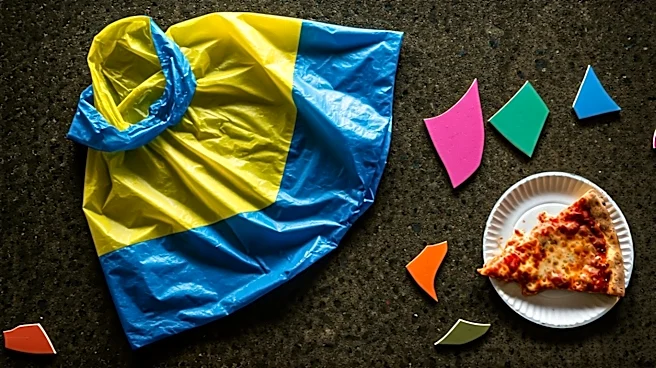
Let’s be honest: sometimes the most memorable part of a cultural event is the food. For years, the undisputed social hub of Frieze wasn’t a specific booth but the pop-up from Roberta’s, the legendary Bushwick pizzeria. Getting a wood-fired pizza and a plastic cup of wine was as much a part of the Frieze ritual as looking at the art. It was the great equalizer. Mega-collectors, starving artists, and curious onlookers all stood in the same long line, bonding over the shared experience of paying a premium for a slice of comfort. In the rarefied air of the art world, the Roberta's pop-up was a grounding, democratic force. It was a reminder that even when surrounded by millions of dollars of contemporary art, nothing quite hits the spot like a perfectly blistered margherita pizza. Its absence in recent years is still mourned by fair veterans.