


The Understandable Confusion
Let's be fair, it's easy to see why the lines get blurred. The term Americana as a radio format and industry category gained steam in the 1990s, right around the time alternative country was having its moment. Bands like Uncle Tupelo, often cited as pioneers
of the alt-country movement, are now seen as foundational to modern Americana. These artists were reacting against the polished, pop-friendly sound of mainstream Nashville country, and their punk and indie-rock infused take on country traditions laid the groundwork for what would become a much larger musical ecosystem. The magazine that championed this movement was even called 'No Depression', named after an Uncle Tupelo album, which itself was named after a Carter Family song—showing just how intertwined these histories are.
Myth: Alt-Country Is the Same as Americana
The myth is that these two terms are interchangeable. Alternative country, at its core, was a specific subgenre that emerged in the '80s and '90s. Think of it as country music's rebellious younger sibling, who spent jejich formative years listening to The Clash and The Replacements alongside Hank Williams and Gram Parsons. It’s defined by that collision of rural tradition and urban punk energy. Artists like Steve Earle, Lucinda Williams, and the aforementioned Uncle Tupelo (and its offshoots, Wilco and Son Volt) took the storytelling heart of country and gave it a raw, garage-rock edge that mainstream radio wouldn't touch.
Reality: Americana Is a Much Bigger Tent
This is where the distinction becomes crucial. If alt-country is a specific branch, Americana is the entire tree, with roots stretching deep into the soil of American music. The Americana Music Association (AMA) defines it as contemporary music incorporating elements of country, roots-rock, folk, bluegrass, R&B, and blues. It's a purposefully broad definition designed to house artists who don't fit neatly into any single category. While an alt-country band like Whiskeytown certainly fits under the Americana umbrella, so does a soul and gospel legend like Mavis Staples, a folk historian like Rhiannon Giddens, or a blues-rock powerhouse like The Black Pumas. None of them would be described as 'alt-country'.
It's More About Ethos Than Sound
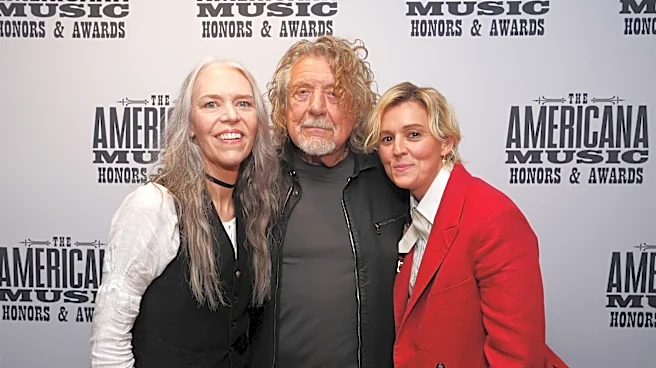
More than a strict set of sonic rules, Americana is a shared ethos. It's about a reverence for authenticity, lyrical craftsmanship, and a connection to the diverse tapestry of American roots music. This is why you'll find artists as varied as Jason Isbell, with his introspective rock-infused songwriting, and Brandi Carlile, with her soaring folk-pop anthems, sharing the same stage at the Americana Honors & Awards. The genre celebrates the songwriter and the story, whether it's delivered with a twangy Telecaster, an acoustic guitar, a soulful organ, or a mournful fiddle. It prioritizes the artist's unique voice over adherence to a commercially polished formula.